
The glass should leave the cigar a first third. It should not scorch it, or ice-cream it.
How the cigar is built for this pairing
Spirits are hotter and often sweeter than a still red, and less acidic than Champagne. They will flatter a cigar that already has oil and punish a cigar whose only virtue is delicacy—especially if the pour is barrel-proof theater or a liqueur wearing a serious label.
Connecticut shade wants a lighter whiskey, a quiet cognac, or a rum that is not dessert, and a cigar that waits until the glass has done its first work. A sweet bourbon or a spiced rum will bury it. Cameroon and Sumatra have enough spice for a rye or a drier rum without going loud. Habano and Corojo are the natural midweight partners—pepper against oak, cedar against a little vanilla if the vanilla stayed in the barrel and not in a syrup. Maduro and San Andrés can take a richer whiskey, an aged rum, or a cognac that is already caramel if the pour is not candy and the last third was written. Two sweet things will agree too loudly. That is the fault.
A mild Dominican can close a lunch pour that was not a dare. A ligero-forward Nicaraguan will treat most spirits as a warm-up and then ignore the glass—or turn the last third into heat stacked on proof. Construction that burns cool matters. A canoeing maduro next to a barrel-proof sip is heat on heat. Wait until the cigar is even. Water in the glass is allowed. Water as a personality is not required.
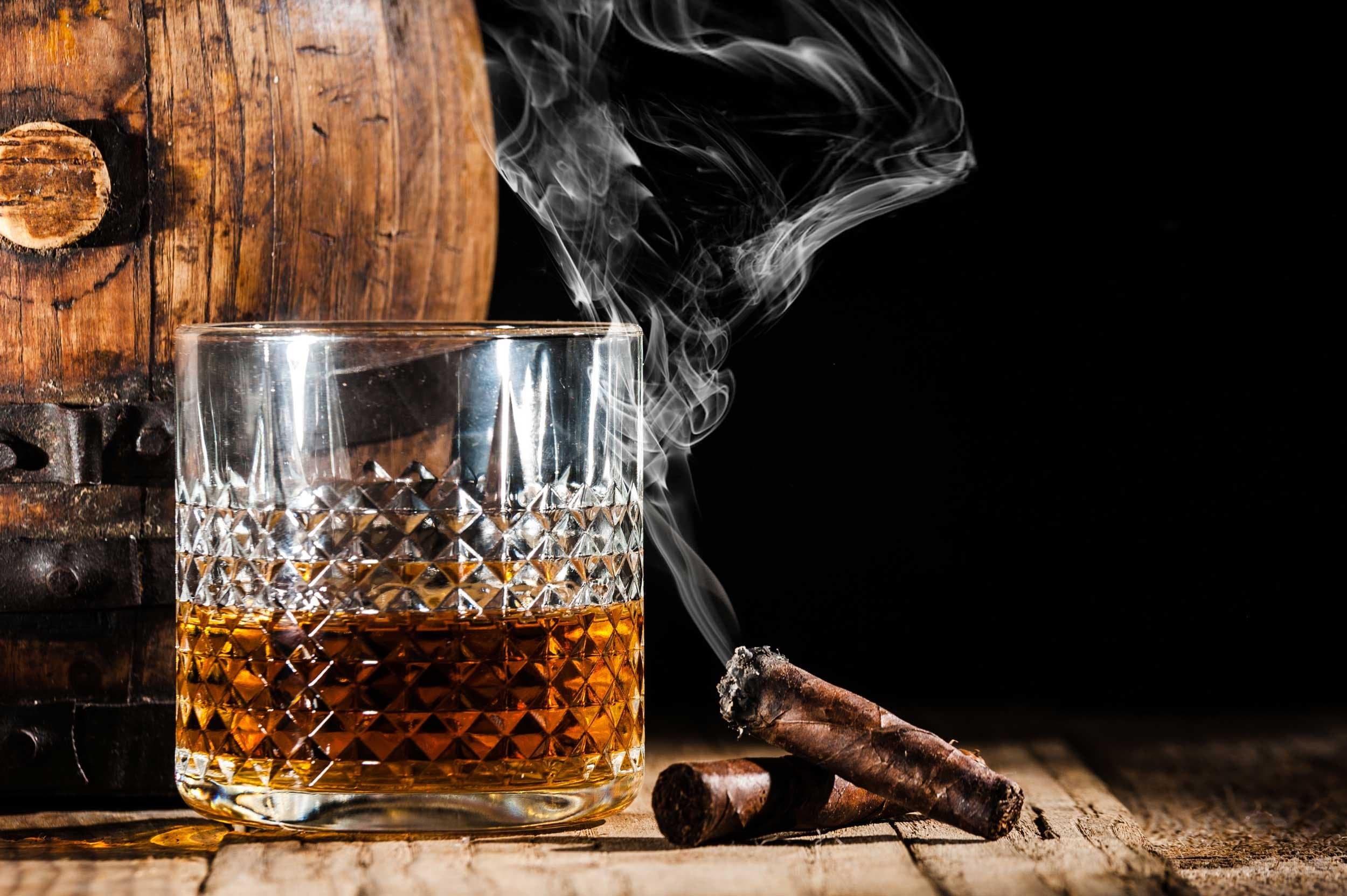
How the glass is built
By habit, this pairing fails on three decisions: how hot the proof is, how sweet the barrel or the dose is, and whether you light as a toast. Category decides which of those three is the pairing.
Whiskey—bourbon, rye, Scotch—is oak, grain, and proof. Bourbon’s vanilla and sweetness want a midweight or a maduro that can take them; shade wants a quieter barrel or a later cigar. Rye’s spice meets Habano without much argument. A peat that is a bonfire will treat most cigars as furniture; if you mean that evening, let the glass finish first. Barrel-proof is a volume knob. Add water if you mean to taste the leaf. Do not add water as a speech.
Cognac and armagnac are fruit, oak, and a warmth that is not always sugar. A dryish VSOP can sit with Cameroon or Habano. An XO that drinks like dessert is a maduro glass, or a last-third glass. Do not pour a sweet cognac on shade and call it continental. Continental is not a pairing. Acid is not this page’s gift; the flute has that job.
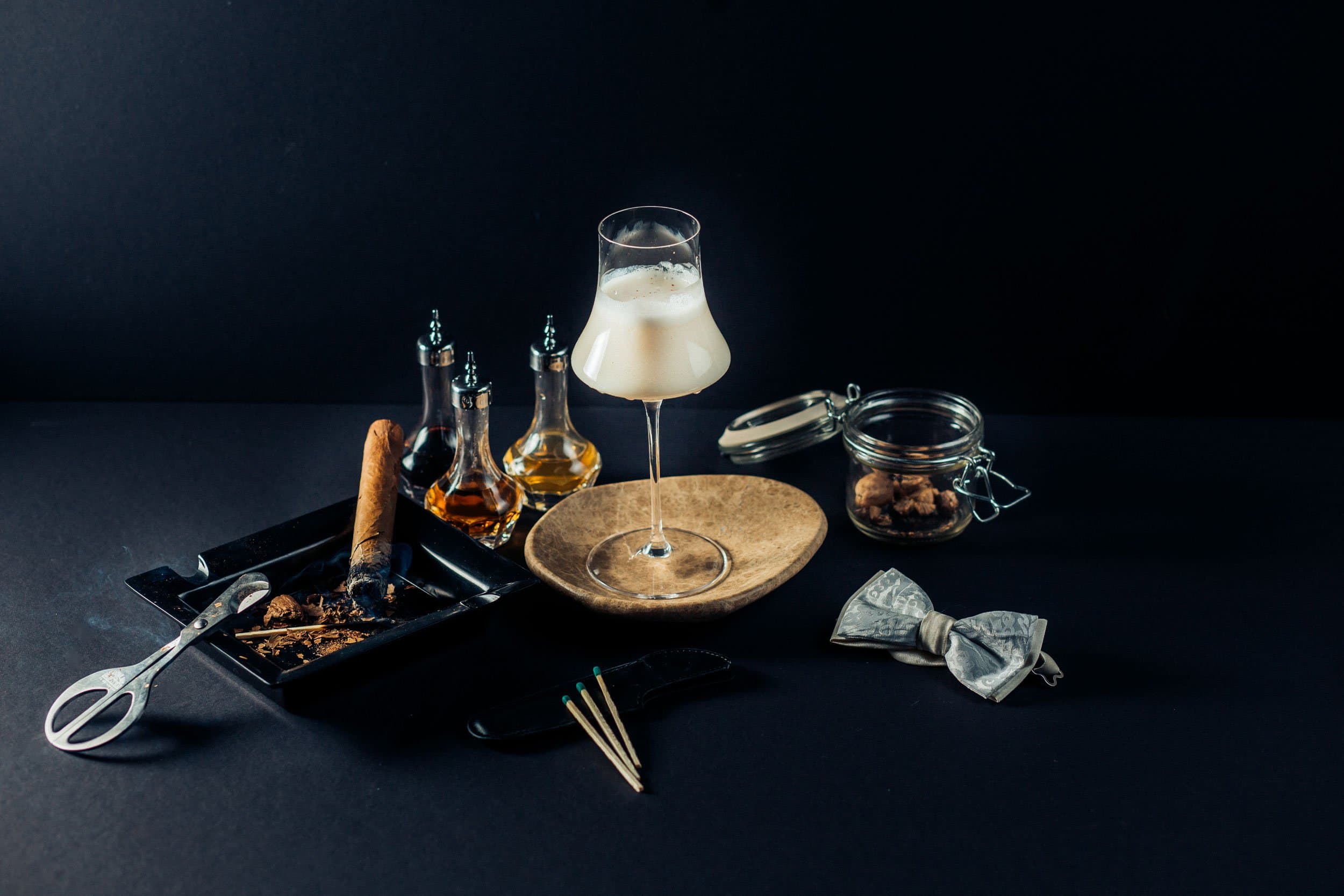
Rum is cane and, at best, time. A dry aged rum can meet maduro the way bark meets leaf when both stayed specific. A spiced or sweet rum is a glaze in a glass. Use the dessert faults. Tequila and mezcal are heat and, in mezcal, smoke that is not the cigar’s smoke. A quiet blanco can sit after a mild cigar. An aggressive mezcal will erase shade and argue with a maduro about who owns the fire. One fire at a time unless you meant a fight.
Gin and vodka are the clear cousins. Gin’s botanicals can sit with a spice wrapper if the gin is not perfume. Vodka is a reset, not a pairing—useful if you overshot the whiskey, not a program. Do not build an evening on a reset.
Serving temperature and dilution are structural. A warm pour tastes hotter and sweeter. A freezer pour next to a first puff is how the cigar never starts. A little water or a large ice that you actually meant can open a dare. A melting slush is a third pairing of water you did not taste on purpose.
The glasses you actually drink
A modest bourbon or a rye after dinner, cigar as the glass empties, is how most honest Habano pairings start. If that fails, the proof or the wrapper is wrong, not the idea of whiskey.
A cognac that is not dessert with a Cameroon or a midweight, cigar later, is the working alternative when the bottle is already French. Do not invent a Champagne on top. The flute essay is next door if the cork is already out.
The serious end
A whiskey with oak still in proportion next to a rested Habano is the haute of this page. A dry aged rum or a cognac that earned caramel next to a maduro that earned it is the other serious end. Neither needs a toast speech. If the room is already pouring bubbles, use that essay. If the bottle is still wine, use that essay. If the plate is the pairing, use the food essays. This page is proof and sugar in a glass.
A serious pour is one you can still taste after the first third. If the glass erased the leaf, you stacked heat. If the leaf erased the glass, you brought a dare to a quiet bottle. Change one.
Service
Timing. Light as the glass empties, or after the first sip has cooled—not through the toast.
Proof. Water is allowed. Theater is not required. Barrel-proof next to a canoe is how both taste like a burn.
Sugar. Dry with shade. Richer with maduro. Do not split the difference into a sweet bourbon and a confused wrapper.
Pace. Alcohol speeds the hand. Slow the cigar. A robusto is enough.
The box. Spirits do not belong as spray near an open humidor. Close the lid before the pour.
Cousins. If Champagne is already open, use that essay. If still wine is open, use that essay. If the plate is beef or cheese, use those essays. Do not stack three pairings on a toast.
Food in the chair. Proof plus nicotine is how a guest goes quiet. Eat if the evening is long. The nicotine pages are the chair. This page is the glass.
A pairing map
| Cigar construction | Working glass | Serious glass | Why it holds |
|---|---|---|---|
| Mild. Connecticut shade, light Dominican | Quieter whiskey, a dryish cognac; cigar after | A refined spirit, not a sweet bourbon | A quiet line keeps honey and cedar. Sugar and peat will not. |
| Medium. Habano, Corojo, Sumatra, Cameroon | Rye, modest bourbon, VSOP, a drier rum | Oak in proportion, proof you can still taste through | Spice meets spice. Barrel-proof theater ruins it. |
| Full. Maduro, San Andrés | Richer whiskey, aged rum, a caramel cognac | A dry-specific sweet, not a liqueur | Leaf molasses can take a little sugar. Shade cannot. |
Faults and mismatches
- Spiced rum on Connecticut shade. The cigar never starts. Change the glass or the leaf.
- Lighting through the first pour. Ash and proof. Neither is improved.
- Barrel-proof next to a first puff. Heat stacked on heat.
- Peat as a personality with a delicate wrapper. The leaf becomes furniture.
- Champagne or wine as a third pairing on the same toast. One cousin is enough.
- Treating the cigar as a prop for the bottle. The leaf does not care about the label. It cares about proof, sugar, and heat.
Champagne is pressure and dosage. Wine is still. Food is the plate. If the chair is the question, eat. This page is the brown glass—and the clear ones that behave like it.