
Tannin is not structure beside smoke. It is grip. If the wine already dries the gums, the cigar will finish the job.
How the cigar is built for this pairing
Wine is more tannic than beer and less alcoholic than a spirit. It will flatter a cigar that already has oil and punish a cigar whose only virtue is delicacy—unless the wine itself is delicate and the pour is small.
Connecticut shade can work with wine if the wine is red fruit and polish, not extraction: village Burgundy, a Rioja crianza, a Bordeaux that has left its primary fruit behind. A young Napa cabernet will varnish it. Cameroon and Ecuadorian Sumatra have enough spice to meet Rioja and a Super Tuscan that is not a fruit bomb. Habano and Corojo are the natural midweight partners—pepper against Tempranillo oak, cedar against a classed-growth frame. Maduro and San Andrés share port’s dried fruit and amarone’s raisin. The danger is two sweet, dried things agreeing too loudly. A drier tawny, or a Super Tuscan with real acidity, keeps that from happening.
A mild Dominican is a lunch wine problem. White wine is usually too lean; a light red with lunch can work if the cigar waits until the plate is quieter. A ligero-forward Nicaraguan wants more wine, not less—more fruit, more extract, more sweetness at the port end—or the cigar will treat the glass as a palate cleanser and ignore it. Construction that burns cool matters. A canoeing maduro next to a first-growth that is still a tannin exercise is a waste of both.
How still wine is built
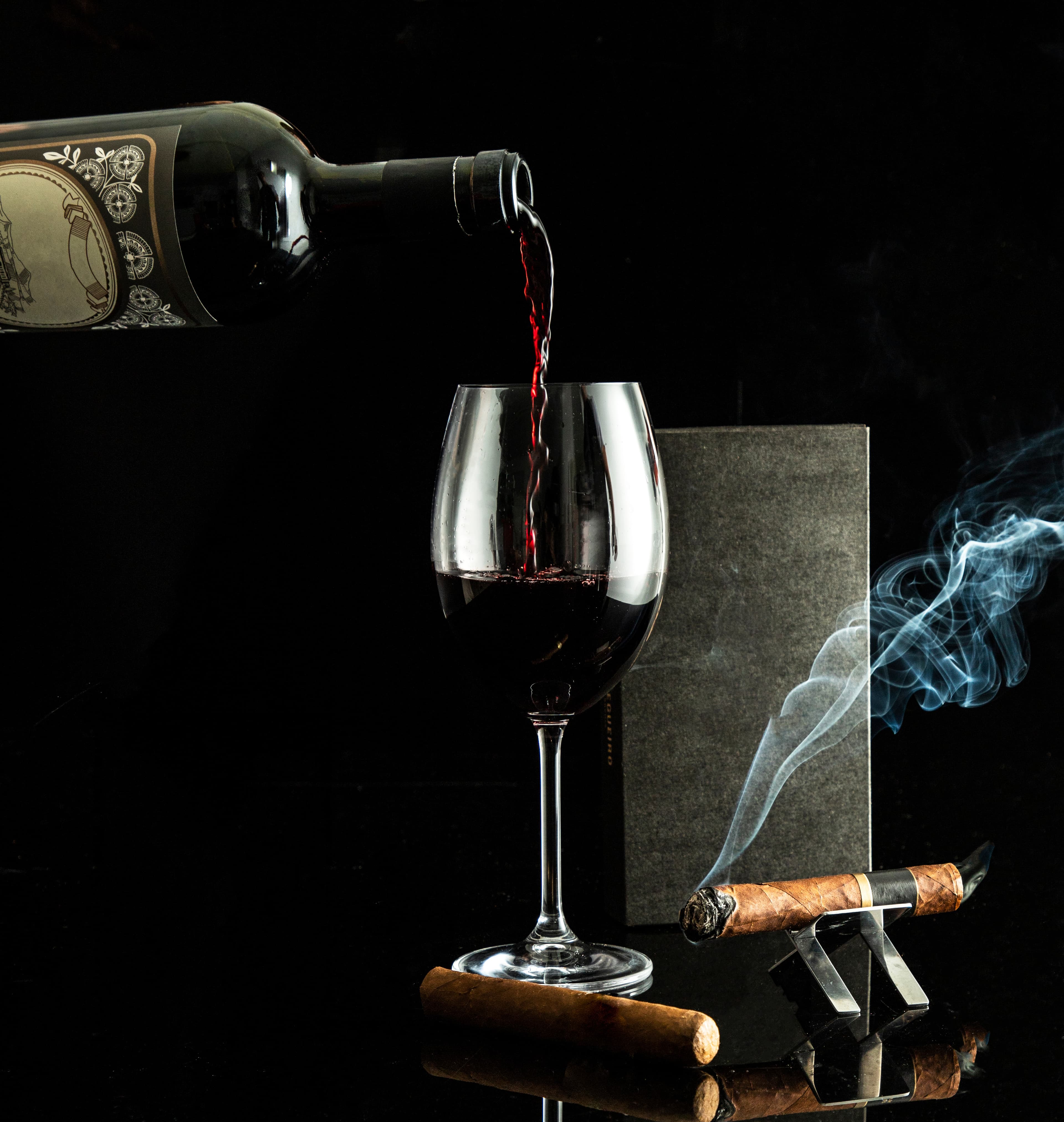
By habit, still wine is fruit, acid, tannin, and whatever the barrel added. Everything that matters for pairing sits in those four, plus whether the wine is oxidative (Rioja, some Bordeaux with age) or primary (a young New World cabernet).
Burgundy is pinot: red fruit, earth, and a frame that can stay polite. Village and premier cru wines with some age are kinder to shade than a dense New World pinot with new oak. Bordeaux is cabernet and merlot as architecture. A wine that has gone from fruit to cedar and graphite can sit with Habano. A young, extracted bottle is a tannin problem. Rioja is Tempranillo and American oak as a house style: coconut, leather, red fruit. Crianza and reserva are the working language. Gran reserva is the serious end when the oak has become polish.
Super Tuscan and serious Chianti sit between Bordeaux structure and Italian acidity. They can meet a medium cigar if the fruit is not jam. Napa cabernet is often more oak, more alcohol, more extraction. Pair the bottle you poured, not the reputation of the valley: a restrained, older Napa can be savory; a young cult bottle is usually too much wood for a mild cigar and too much sweetness for a precise one.
Amarone is dried grape, alcohol, and bitter-sweet depth. Vintage port and a serious tawny are the fortified end: sweetness as structure, not as dessert sauce. Sauternes is botrytis and acid; it can work with a chocolate-leaning maduro in a small pour, and it will cloy next to a dry, peppery Nicaraguan.
The bottles you actually pour
A village Burgundy or a modest Rioja is how most honest cigar-and-wine pairings start. They have fruit enough to be heard and tannin that does not grind. A Côtes du Rhône that is more pepper than jam can sit with Cameroon. A house Bordeaux that is not trying to be a first-growth impression is often better than the impression.
A Super Tuscan that still tastes of Tuscany—Sassicaia and its neighbors when they are savory rather than international—adds cabernet architecture without always adding Napa sweetness. Pair it with Habano, not with shade.
These are not lesser bottles. They are how the pairing actually starts. If they fail, the cigar or the tannin is wrong, not the idea of wine.
The serious end — and Champagne
Classed-growth Bordeaux and a first-growth that has gone savory can be exact next to a rested Habano or an oily Dominican. They are wasted on a young ligero that will turn their tannin into ash. Age here is not a brochure. It is whether the wine has left primary fruit.
Vintage port is the maduro’s natural cousin: dried fruit, spirit strength, sweetness as frame. A late-bottled vintage or a serious tawny is the working version of the same idea. Do not pour vintage port as a flex next to a Connecticut. The wrapper will not survive the sweetness.
Sauternes and a Barsac with real acid can close a dessert maduro if the pour is small. They are not a general cigar wine.
Champagne is not a footnote. Mousse, dosage, and lees are a different pairing language. If the bottle is Champagne, leave this page and use the existing essay. A still wine that happens to be from the same houses is still wine; pair it here. A sparkling wine that is not Champagne may borrow the Champagne rules for mousse and dosage, then come back.
Service
Glass. A proper wine glass, not a tumbler. The point is to smell fruit and oak without bathing the nose in alcohol. A heavy pour in a short glass is how pairings go loud.
Temperature. Cool room for reds that have alcohol; a slight chill for Burgundy and lighter Rioja. Ice-cold red next to a full cigar is a muted suggestion.
Sequence. A sip first, then the cigar, then decide whether the wine has the tannin to continue. If you light first, the wine’s fruit will arrive as a surprise and you will think the bottle is thin.
Ash and pace. Wine acidity makes people sip faster. Slow both. A robusto or a corona gorda is enough. The last third next to a third glass is how tannin and combustion become the only things left.
Food on the table. If beef is already being served, the wine may be doing two jobs. Keep the cigar for the last of the plate, or read the beef essay and treat the wine as a service note, not a second pairing stacked on sauce.
A pairing map
| Cigar construction | Working bottle | Serious bottle | Why it holds |
|---|---|---|---|
| Mild. Connecticut shade, light Dominican | Village Burgundy; Rioja crianza; a modest Bordeaux | A Côte de Nuits or a first-growth that has gone savory | Red fruit and polish keep honey and cedar intact. Extraction will not. |
| Medium. Habano, Corojo, Sumatra, Cameroon | Rioja reserva; a Super Tuscan that is not jam; a quiet Ribera | Classed-growth Bordeaux; a serious reserva whose oak is polish | Resolved tannin frames pepper. Young oak crusts it. |
| Full. Maduro, San Andrés, ligero-led Nicaraguan | Tawny or LBV; a weighty Super Tuscan | Vintage port; amarone; Sauternes only as a small pour | Dried fruit and sweetness as structure. Lean, high-acid wine disappears. |
Faults and mismatches
- Young Napa cabernet on Connecticut shade. Oak and alcohol cook the wrapper. What remains is grass and vanilla.
- A lean white with a full cigar. The wine is a rumor. The cigar continues alone.
- Amarone plus a peppery midsection with no air. Two dried fruits, no lift.
- Vintage port as a flex on a delicate cigar. Sweetness is structure only when the leaf can take it.
- Using this page to replace the Champagne essay. Mousse is not still wine. Send the bottle where it belongs.
Bourbon and beef will appear at the same table. They are cousins, not substitutes. If the glass is a spirit, use the spirit essays. If the plate is steak, use the beef essay and let the wine be service.