
The cigar should survive the plate. It should not decorate it.
How the cigar is built for this pairing
Beef is hotter, fatter, and more savory than a spirit. It will flatter a cigar that already has oil and punish a cigar whose only virtue is delicacy—especially if the crust is dark and the sauce is reduced.
Connecticut shade is the honest caution. A charred ribeye with béarnaise will bury it. If the steak is already on the table, keep the cigar for later, or choose a much quieter cut and a much later light. A simple roast, carved, is the shade’s best chance. Cameroon and Ecuadorian Sumatra have enough spice to meet a strip, a modest roast, or a prime rib that was not painted. Habano and Corojo are the natural midweight partners—pepper against crust, cedar against a dry-aged savor, enough oil for a standing rib. Maduro and San Andrés share short rib’s collagen and brisket’s bark when the bark is smoke and salt, not sugar. The danger is barbecue glaze: two sweet, sticky things agreeing too loudly.
A mild Dominican can sit after a simple roast, not during a crusted côte de boeuf. A ligero-forward Nicaraguan wants more plate, not less—more fat, more crust, more gelatin—or the cigar will treat the beef as a palate cleanser and ignore it. Construction that burns cool matters. A canoeing maduro next to a blazing crust is heat stacked on heat.
Maduro is fermented leaf. Brisket and a long rib are smoked meat. Those two fermentations can agree when both are dry and specific: salt, time, a little oil. They fight when the pit was sweet and the wrapper is already molasses. Do not treat “smoke” as a single flavor. The cooker’s smoke is wood and bark. The cigar’s is combustion and leaf sugar. If both are already loud, wait until the plate empties and the first third can start clean.
How the plate is built
By habit, beef pairings fail on three decisions: how hard the surface was cooked, how much fat remains, and what was reduced onto it. The cut decides which of those three is the pairing.
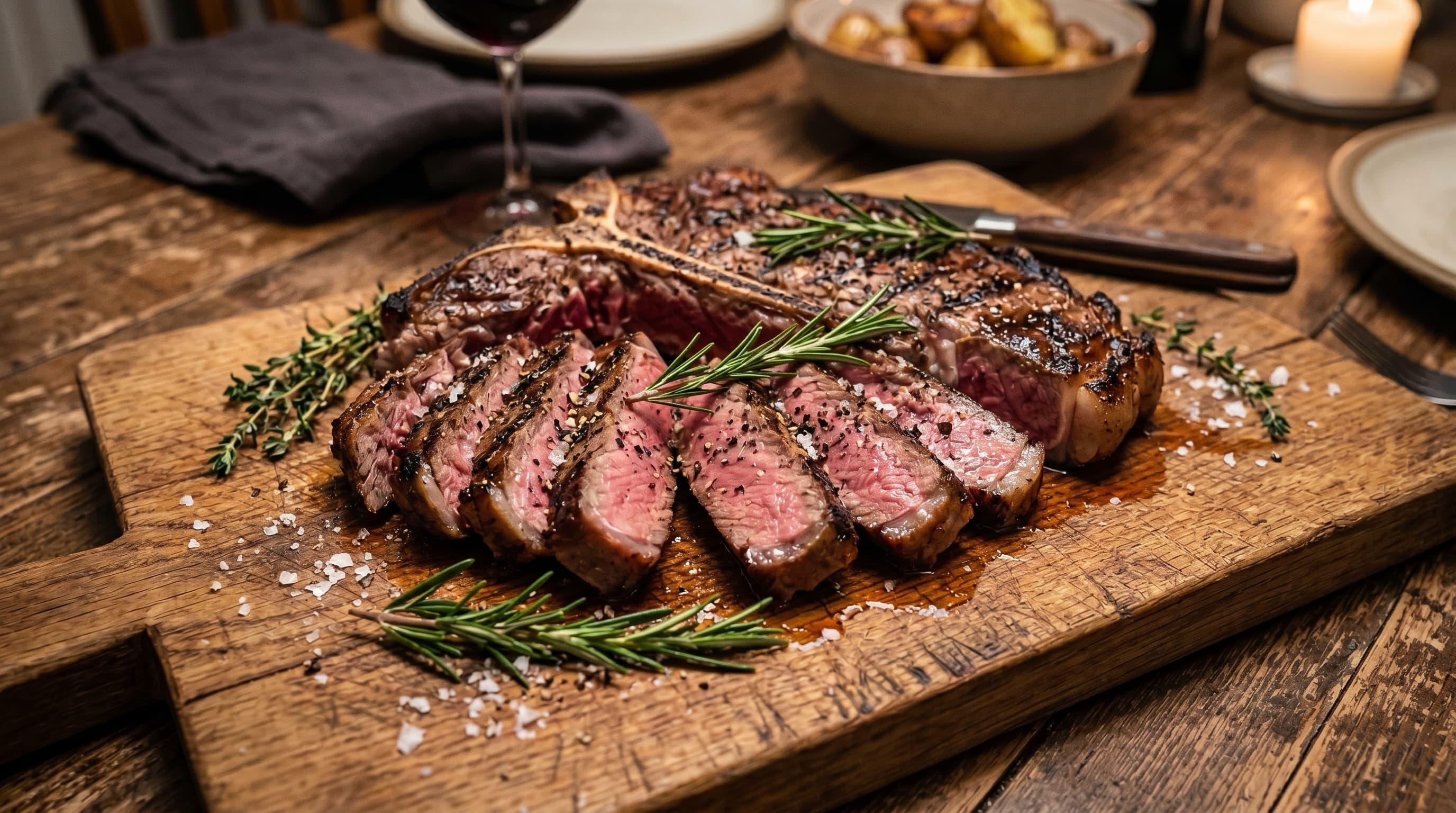
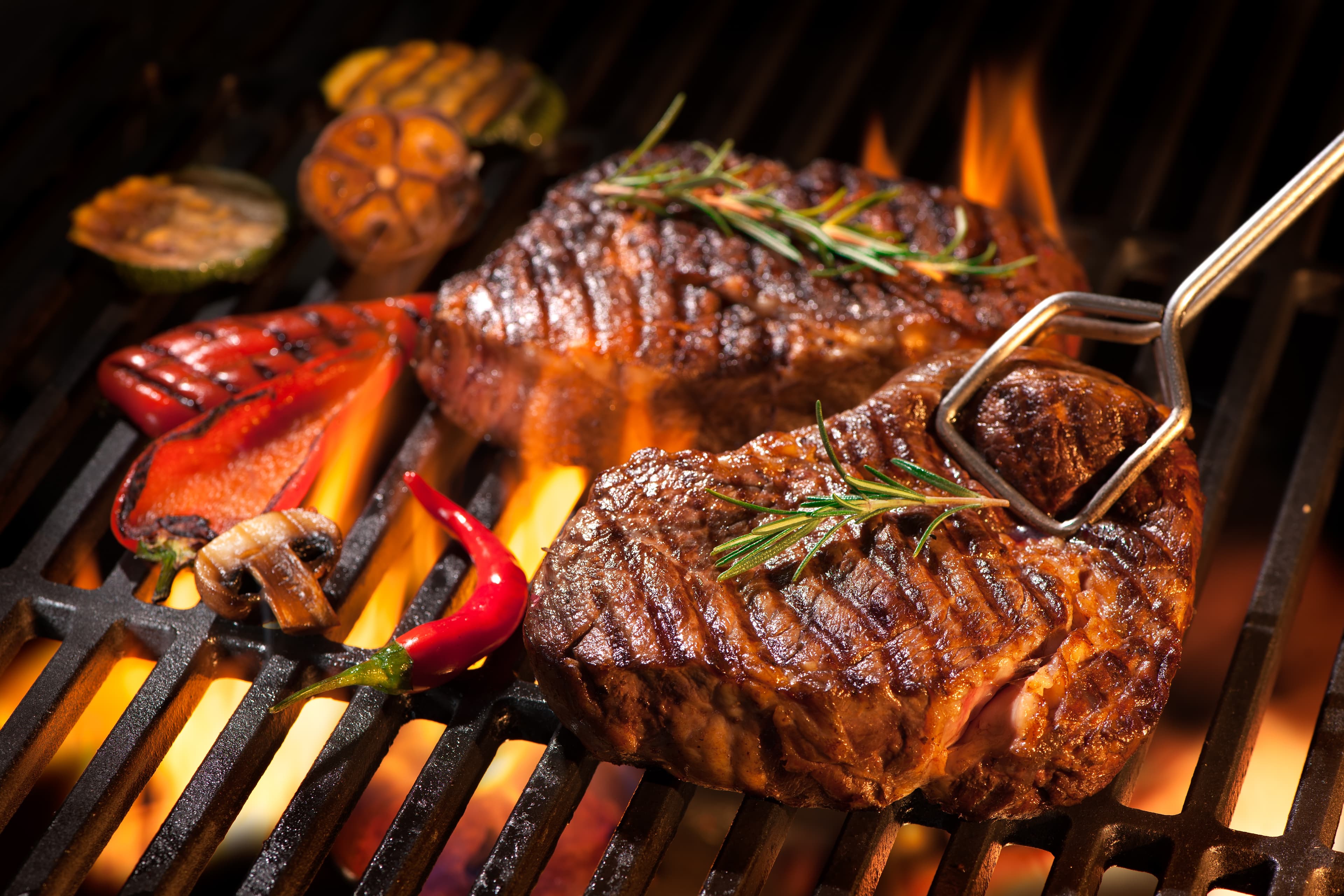
Steak—filet, strip, ribeye, T-bone, côte de boeuf—is the working language of a great many rooms. Filet is quiet and often too quiet for a full cigar; it can work with shade if the cigar waits. Strip and ribeye have fat and a crust the wrapper can answer. A T-bone is both: a strip’s crust and a tenderloin’s hush on the same bone. Dry-aged beef adds a savory, almost cheese note that Habano understands. A black crust from a screaming pan is char as volume. It will erase a mild cigar and can still work with a midweight if you let the meat rest and start the cigar as the plate empties.
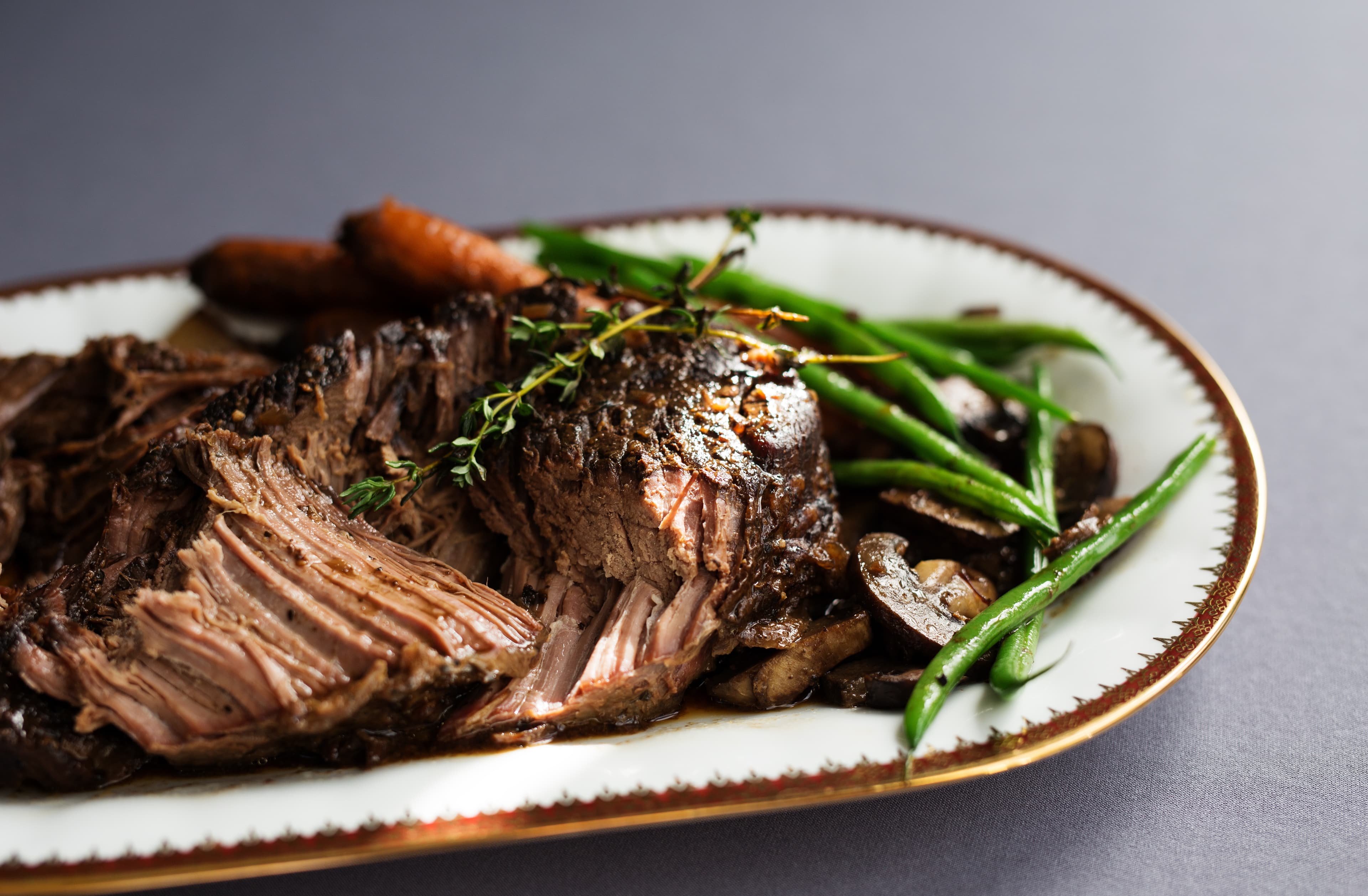
Roast and prime rib are a different clock. A sirloin roast, a quiet côte, a standing rib carved at the table: more juice, less theater, a crust that came from the oven rather than a screaming pan. This is the plate a Cameroon or a mild Dominican can close if you do not light until the carving is done. Prime rib with a dark exterior is closer to steak; treat the crust as volume and the interior as a roast. Yorkshire pudding, horseradish, a wine reduction that has been sweetened—those are cousins stacked on the jus. Keep them on the side if you mean to smoke. A roast that arrives lacquered is a glaze again.
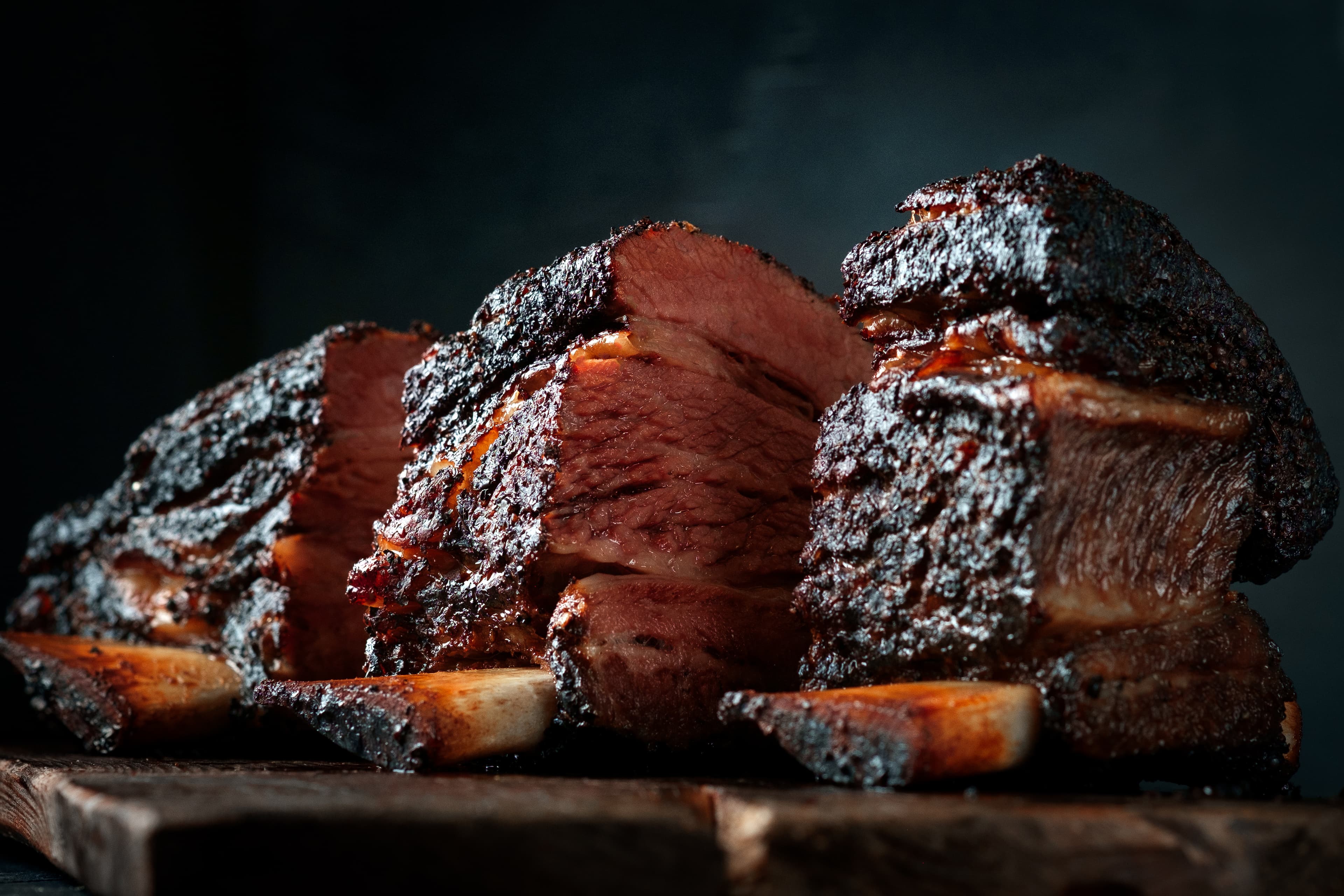
Short rib and beef rib are bone, collagen, and time. They are not brisket. Braised until the bone slips, they are silk and beef, not candy. Smoked plate ribs carry bark the way a brisket does, but the bone is the structure and the pairing is gelatin, not a flat. A reduction that has been sweetened is a glaze. Pair the silk, not the glaze. A maduro can meet a dry bark. A squeeze bottle cannot.
Brisket is bark, fat, and a long cook—low and slow, whether the cooker is a pit or an oven that was not in a hurry. The point is fat and gelatin; the flat is leaner and will dry if it is carved too soon. Salt-and-pepper bark can meet a maduro: the leaf’s fermentation and the meat’s smoke are cousins when both stayed dry. A sweet, sticky barbecue brisket is dessert on a plate; use the dessert faults, not this page’s savory rules. There is no need to name woods or regions. Time, salt, and whether the surface is bark or lacquer are enough.
Sauce is a structural decision. Jus and a little marrow are frame. Béarnaise is fat on fat—possible with a midweight, loud with a maduro. Peppercorn can echo Habano. A sweet wine reduction or a bourbon glaze is a third pairing. If the glass is already a Bordeaux or a bourbon, keep the sauce quiet so you are not pairing three things at once.
Doneness is not a pairing virtue. A blue steak next to a full cigar is iron and heat; a well-done steak is dry fiber the leaf will treat as ash. Rest the meat until the juices stay in. The cigar is not there to hide a cook who rushed. If the beef is dry-aged, say so to yourself: that savory, almost cheese note is a partner for Habano, not a reason to light a Connecticut through the first slice.
The plates you actually eat
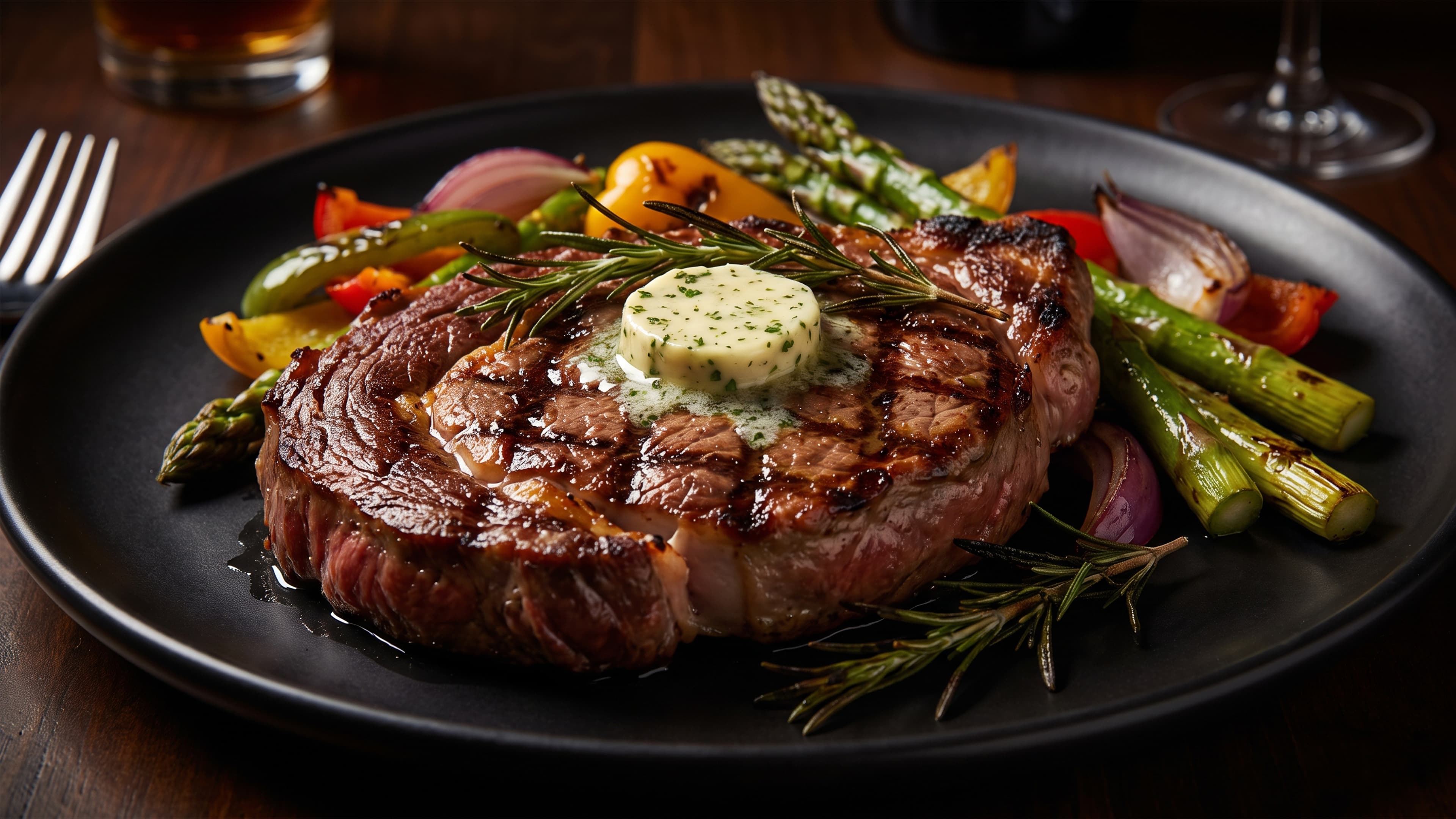
A rested strip or ribeye, sauce on the side, is how most honest cigar-and-beef pairings start. The cigar begins with the last bites or just after. Salt, fat, and a brown crust are enough. If that fails, the construction or the glaze is wrong, not the idea of beef.
A simple roast—carved, a quiet jus, vegetables that were not candied—can carry a Cameroon or a mild Dominican if you do not light until the carving is done. Lunch beef is possible; a morning cigar with last night’s steak is a different life than most rooms are living.
The serious end
A côte de boeuf or a proper dry-aged ribeye is the steak end: fat, crust, and time. Next to a rested Habano it can be exact. Next to a Connecticut it is usually a waste of the wrapper. Do not save the loudest cigar for the most expensive cut. Save the cigar that can take the crust.
A standing rib with a real crust, or a roast that was given hours instead of a glaze, is the oven’s serious end. It does not need a pit to be a pairing. Cameroon or Habano, cigar after the carving.
Short rib cooked until the bone slips, or a brisket whose bark is salt and smoke, is the other serious end. These plates have the gelatin a ligero can meet. They do not need a bourbon pour to prove the point. If a glass is already open, treat it as service: a Bordeaux with resolved tannin, or a bourbon that is not barrel-proof theater. The pairing on this page is still the plate and the leaf.
Service
Timing. Light as the plate empties, or with the last few bites if the room is unhurried. A cigar through the first cut is how ash lands on béarnaise and the beef tastes like a humidor.
Heat. Let the steak rest. Let the roast rest. A screaming-hot plate next to a first puff is how both taste like char and nothing else.
Sauce. On the side if you mean to smoke. A pool of reduction under every slice is how the cigar never starts.
The cousins. If wine is already poured, use the wine essay for the glass and this essay for the plate. If bourbon is already poured, use the bourbon essay for proof and oak. Do not invent a third pairing on top of both.
Ash and pace. Fat makes people eat faster and then smoke faster. Slow the cigar. A robusto is enough. The last third next to a second helping is how collagen and combustion bitter become the only things left.
The box. Beef does not belong near an open humidor. Fat and smoke from the plate will perfume a small room; keep the box closed until you are actually choosing.
Leftovers. Cold roast the next day is a lunch cigar if the construction is mild. Cold rib or brisket with a maduro at noon is a different life; possible, not default. Reheated sweet sauce is still sugar.
A pairing map
| Cigar construction | Working plate | Serious plate | Why it holds |
|---|---|---|---|
| Mild. Connecticut shade, light Dominican | Filet or a simple roast; cigar after the plate | A refined roast, not a crusted ribeye | Quiet beef keeps honey and cedar. Char and béarnaise will not. |
| Medium. Habano, Corojo, Sumatra, Cameroon | Rested strip, ribeye, or T-bone; jus, not glaze | Dry-aged côte, or a standing rib, sauce on the side | Fat and pepper meet wrapper spice. Sugar in the sauce ruins it. |
| Full. Maduro, San Andrés, ligero-led Nicaraguan | Beef rib or a salt-and-pepper brisket | Long-cooked beef with real collagen, little sugar | Leaf molasses can take bark and gelatin. Barbecue glaze cannot. |
Faults and mismatches
- A charred ribeye with béarnaise on Connecticut shade. The cigar never starts. Wait, or change the construction.
- Calling a rib a brisket. Bone is not a flat. Pair the collagen you actually cooked.
- Barbecue glaze on a maduro. Sugar and smoke fight the wrapper. Salt-and-pepper bark was enough.
- Lighting through the first cut. Ash on the plate, beef in the smoke. Neither is improved.
- Bourbon as a third pairing on top of sauce. One cousin is enough. The plate is already a pairing.
- Treating the cigar as tableside theater. The leaf does not care who is watching. It cares about fat and char.
Poultry and pork are not lesser beef. They have different fats and different failures. If the plate is a bird, use that essay. If the plate is a roast loin or a ham, use the pork essay. If the plate is seafood, use the seafood essay. If the plate is venison, use the wild-game essay.