
Skin and jus matter more than the name of the bird. A glazed chicken is dessert. A rendered duck is a pairing.
How the cigar is built for this pairing
Poultry is quieter than beef and more forgiving than fish. It will flatter a mild cigar after a simple roast and punish the same cigar if the bird arrives lacquered.
Connecticut shade and a mild Dominican are the roast-chicken constructions: honey, cream, cedar. They belong after carving, or with the last of a quiet jus. A sticky barbecue bird will bury them. Cameroon and Ecuadorian Sumatra have the baking spice that duck fat and a guinea hen can answer. Habano and Corojo meet a richer bird—duck breast, a roasted capon with real skin, a pheasant that is not dry. Maduro and San Andrés share duck’s cocoa-adjacent fat and a goose’s depth. The danger is orange glaze, cherry sauce, or a honey lacquer: two sweet things, then ash.
A ligero-forward Nicaraguan wants more bird, not less. Poached chicken will disappear. Duck confit or roast goose can meet it. A hunted bird has its own page. If the plate is a simple roast chicken, wait until the plates are gone or choose a quieter cigar.
How the plate is built
By habit, poultry pairings fail on the glaze and succeed on the skin.
Roast chicken is the working language of a great many rooms. Salt, herbs, rendered skin, a jus from the pan. That plate can close with shade or a mild Dominican. A supermarket bird with a sugar rub is not the same plate. Capon and poulet are the serious version of the same idea: more fat, more skin, still chicken. Pair them as roast chicken with better rendering, not as a different species.
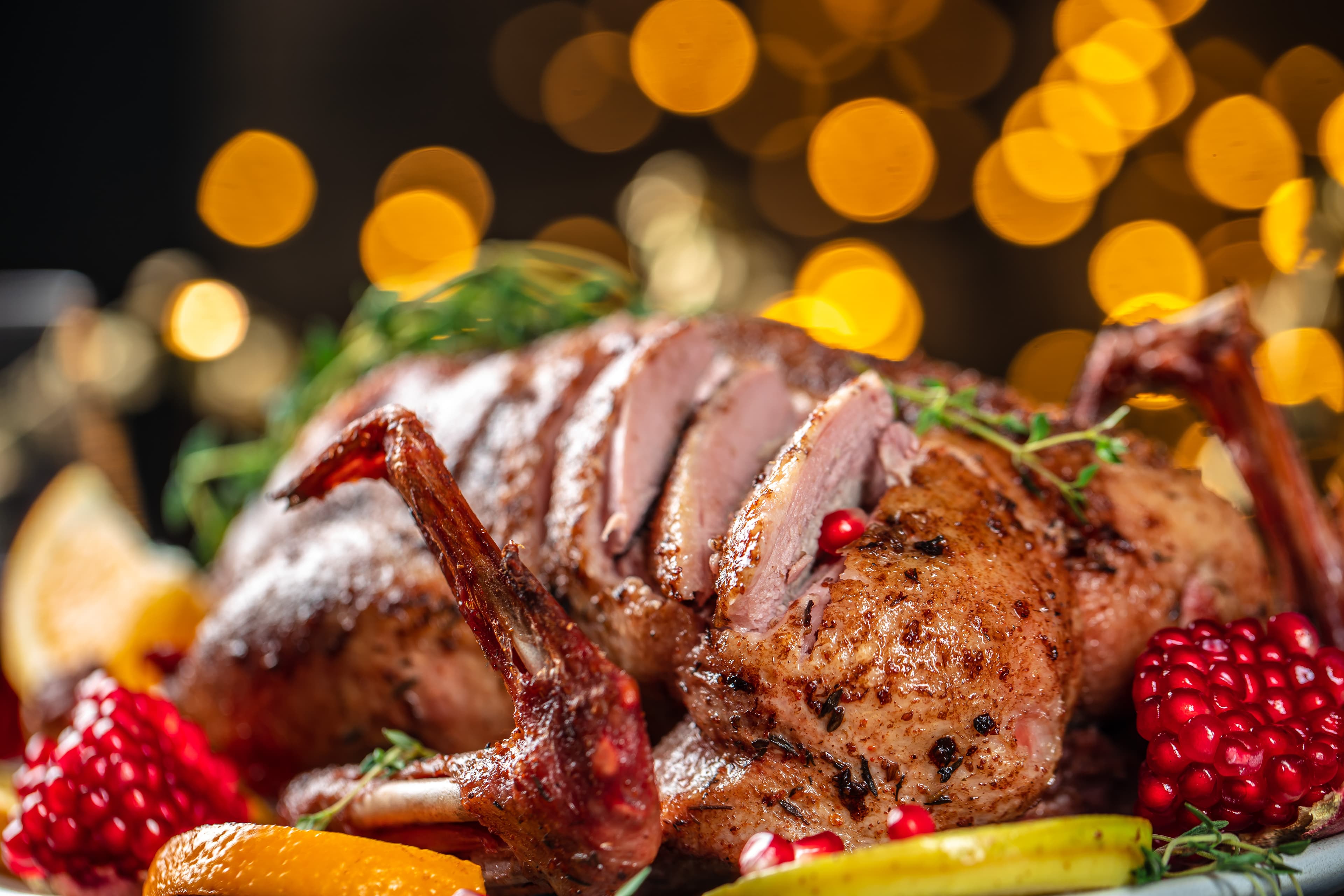
Duck is fat as structure. A breast with the skin rendered, sauce restrained, is the midweight-to-full working plate. Confit is richer and saltier; it can take a maduro if you do not also pour a sweet wine as a third pairing. Goose is the holiday serious end: more fat, more time, a darker jus. It likes oil in the leaf. A sweet stuffing next to it is the dessert fault again.
Guinea hen and squab are the farm birds that sit between chicken and duck. Guinea hen has enough fat for Cameroon. Squab is bloodier and can meet Habano. Pheasant, quail, partridge, dove, and wild duck are hunted; they live on the wild-game page, with venison. If a farm bird tastes of liver, do not add combustion.
Sauce is the pairing. Jus, a little thyme, a drop of wine cooked until it is not wine—frame. Orange, cherry, blackberry, honey, maple: sugar. Peppercorn can echo Habano. A cream sauce can work with shade after the plate. A bourbon or wine reduction that has been sweetened is a cousin stacked on a glaze. Keep it off.
Stuffing and sides will try to become the pairing. Bread, sage, and sausage are savory enough to ignore. Chestnut and fruit stuffing is dessert on the plate; treat it as the dessert faults. Potatoes and a green do not need a theory. If the bird is dry, no cigar will restore the juice. If the bird is excellent, the cigar’s job is not to compete with it. That is why the light waits.
The plates you actually eat
A simple roast chicken, carved, cigar after, is how most honest pairings start. If that fails, the bird was glazed or the cigar was too loud. The idea of poultry and a cigar is not the failure.
A roast duck, sauce on the side, is the midweight working plate. Eat, then smoke. The fat on the lips will go into the first third; that can be useful if the cigar has oil, and cloying if it does not.
The serious end
A poulet that was actually raised as a chicken, or a duck breast from a kitchen that renders skin instead of painting it, is the serious end that does not require a rare bird. Next to a rested Cameroon or Habano it can be exact.
Goose, a wild bird with real depth, or a duck confit that is salt and fat rather than orange is the other end. These plates have the weight a maduro or a ligero can meet. They do not need a spirit to prove it. If a glass is already open—a Burgundy with the bird, a Scotch after—use those essays for the glass. This page is still the plate and the leaf.
A roast bird at lunch is a milder cigar than the same bird at dinner. Heat, hunger, and how much fat is left on the plate change the construction more than the hour on the clock. If the room has already moved to a spirit, finish the bird, then pour. The pairing desk will send you to bourbon or wine if that is what you actually have—not a third theory of poultry.
Service
Timing. After carving, or with the last of the skin. A cigar through the first slice of chicken is how ash lands in the jus.
Skin. Eat it. The pairing is often the rendered fat, not the breast meat. A skinless, poached plate leaves the cigar with nothing to answer.
Hands. Duck fat on the fingers will go into the wrapper. Wipe before you pick up the cigar you mean to finish.
The cousins. Burgundy with roast bird is a wine problem; use the wine essay. Bourbon after goose is a spirit problem. Do not invent a third pairing on top of a glaze.
The box. Roast bird will perfume a small room. Keep the humidor closed until you are choosing. Stuffing and sweet sauces do not belong near cedar.
Leftovers. Cold chicken the next day is a lunch cigar if the construction is mild. Cold duck with a maduro at noon is a different life; possible, not default.
A pairing map
| Cigar construction | Working plate | Serious plate | Why it holds |
|---|---|---|---|
| Mild. Connecticut shade, light Dominican | Roast chicken, herbs not glaze; cigar after | A refined poulet, skin rendered | Quiet jus keeps honey and cedar. Barbecue sugar will not. |
| Medium. Habano, Corojo, Sumatra, Cameroon | Roast duck, sauce restrained; guinea hen with skin | Duck breast, fat rendered, cigar as the close | Bird fat answers wrapper spice. Orange glaze turns it to candy. |
| Full. Maduro, San Andrés, ligero-led Nicaraguan | Duck confit or roast goose; cigar with the last fat | Goose or a farm duck with real depth, not a sweet stuffing | Oil meets darker fat. Poached chicken disappears under ligero. |
Faults and mismatches
- Orange glaze or a sticky reduction on a maduro. The cigar tastes like candy and then like ash.
- A ligero over a poached chicken. The bird disappears. Wait, or change the construction.
- A livery bird plus any cigar. Iron and combustion. The leaf cannot fix the hanging.
- Lighting through the carving. Ash in the jus, bird in the smoke. Neither improves.
- A sweet stuffing treated as the pairing. You have moved to dessert without changing the page.
Beef is fat and char, a louder savory. Seafood is the harder one. Hunted birds and venison have their own essay. If the room has already moved to a plated sweet, use the dessert essay—and leave chocolate and almonds on their own pages.