
Pork is sweeter than beef. The cigar that survives is the one that does not add a second dessert.
How the cigar is built for this pairing
Pork is quieter than a crusted ribeye and louder than a roast chicken. The fat is sweet. The salt can be a ham’s entire argument. Smoke may already be on the plate. A cigar that only knows delicacy will vanish under a bark; a cigar that only knows ligero will treat a loin as a palate cleanser and ignore it.
Connecticut shade and a mild Dominican are the roast-loin constructions: honey, cream, cedar. They belong after carving, or with the last of a quiet jus. A honey-baked ham or a candied rib will bury them. Cameroon and Ecuadorian Sumatra have the baking spice that fennel, rosemary, and a porchetta’s fat cap can answer. Habano and Corojo meet a sear—a chop with a crust, a dry-rubbed rib, a sausage that already has pepper in the casing. Maduro and San Andrés share country ham’s salt and a long roast’s collagen. The danger is the same as beef’s barbecue glaze: two sweet, sticky things agreeing too loudly.
A ligero-forward Nicaraguan wants more plate, not less—more fat, more bark, more salt—or the cigar will walk past the pork. A glazed chop is not more plate. It is sugar. If the pork is a simple loin, wait until the plates are gone or choose a quieter cigar.
How the plate is built
By habit, pork pairings fail on the glaze and succeed on the fat that was actually rendered.
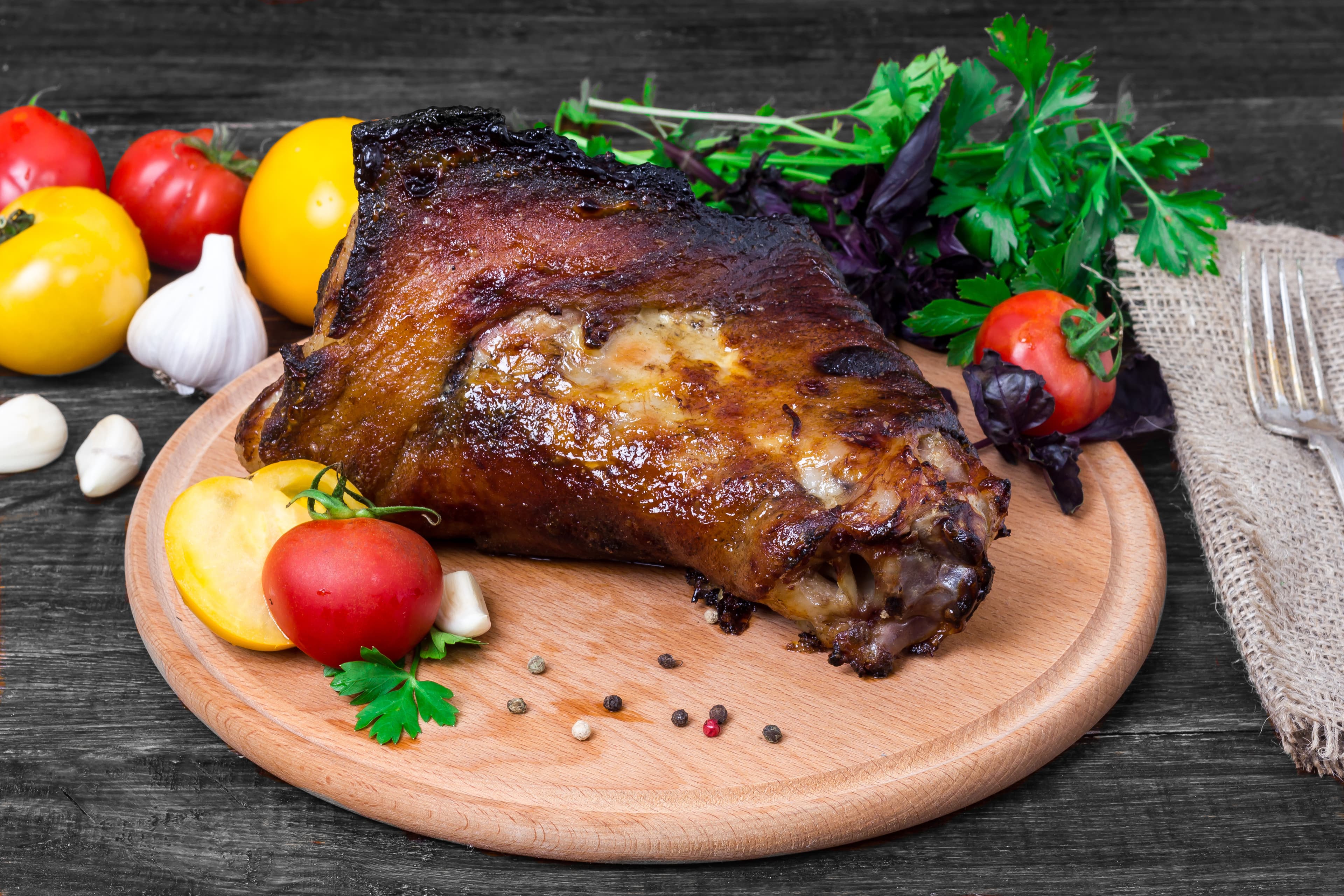
Roast pork and loin are the working language of a great many rooms. Salt, herbs, a little crackling, a jus from the pan. That plate can close with shade or a mild Dominican if you do not light until the carving is done. A loin that was cooked dry leaves the cigar with fiber and nothing to answer. A pork chop is the steak of this page: fat at the edge, a sear if the pan was hot, a sweetness beef does not have. A quiet chop, little sauce, cigar after—the shade path. A crusted chop, jus not glaze, cigar with the last bites—the Habano path.
Porchetta is herb and fat as structure. Fennel, rosemary, garlic, a cap that was scored and rendered. Cameroon’s baking spice is the honest midweight. Habano can take it if the herb is not a paste of sugar. A porchetta that arrives lacquered is a glaze again.
Ham at dinner is salt, and sometimes smoke, and sometimes a clove-studded sweetness that belongs to another page. A city ham, warm, not candied, can sit with Cameroon after the plate. Country ham and a dry jamón have the salt a midweight or a maduro can meet. A honey glaze is dessert. The sliced board—jamón, coppa, the sequence of fat and acid—is the charcuterie essay. One sentence is enough: do not use this page to reprint it.
Bacon and smoked pork are already a cigar if the smoke was heavy. Breakfast bacon, salt and fat, can extend a mild Dominican after the plate. Maple bacon is sugar. A smoked shoulder that tastes of the pit is two smokes next to a maduro; it can work if both are specific and the sauce is not candy. It fails if you add a third smoke and call it style.
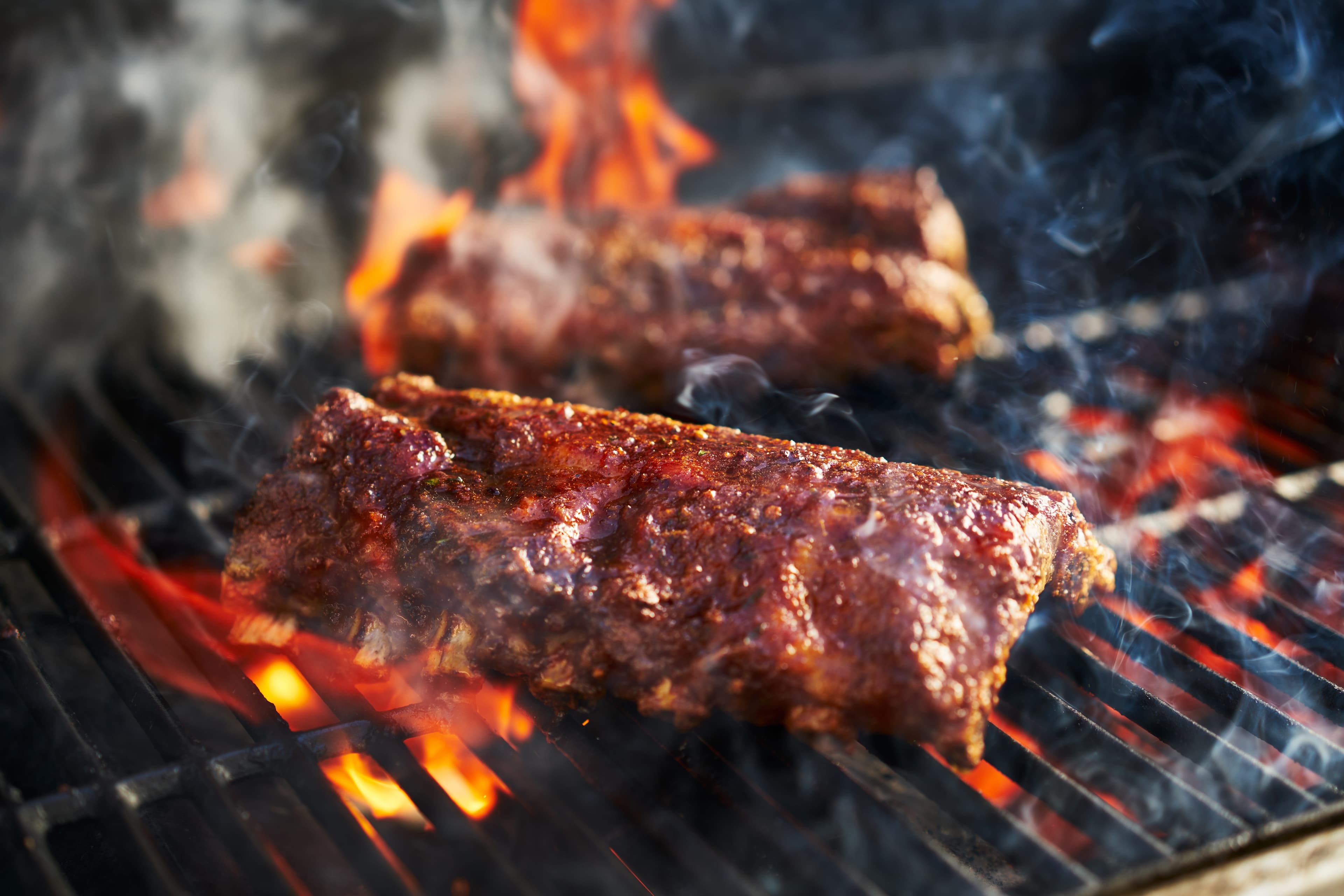
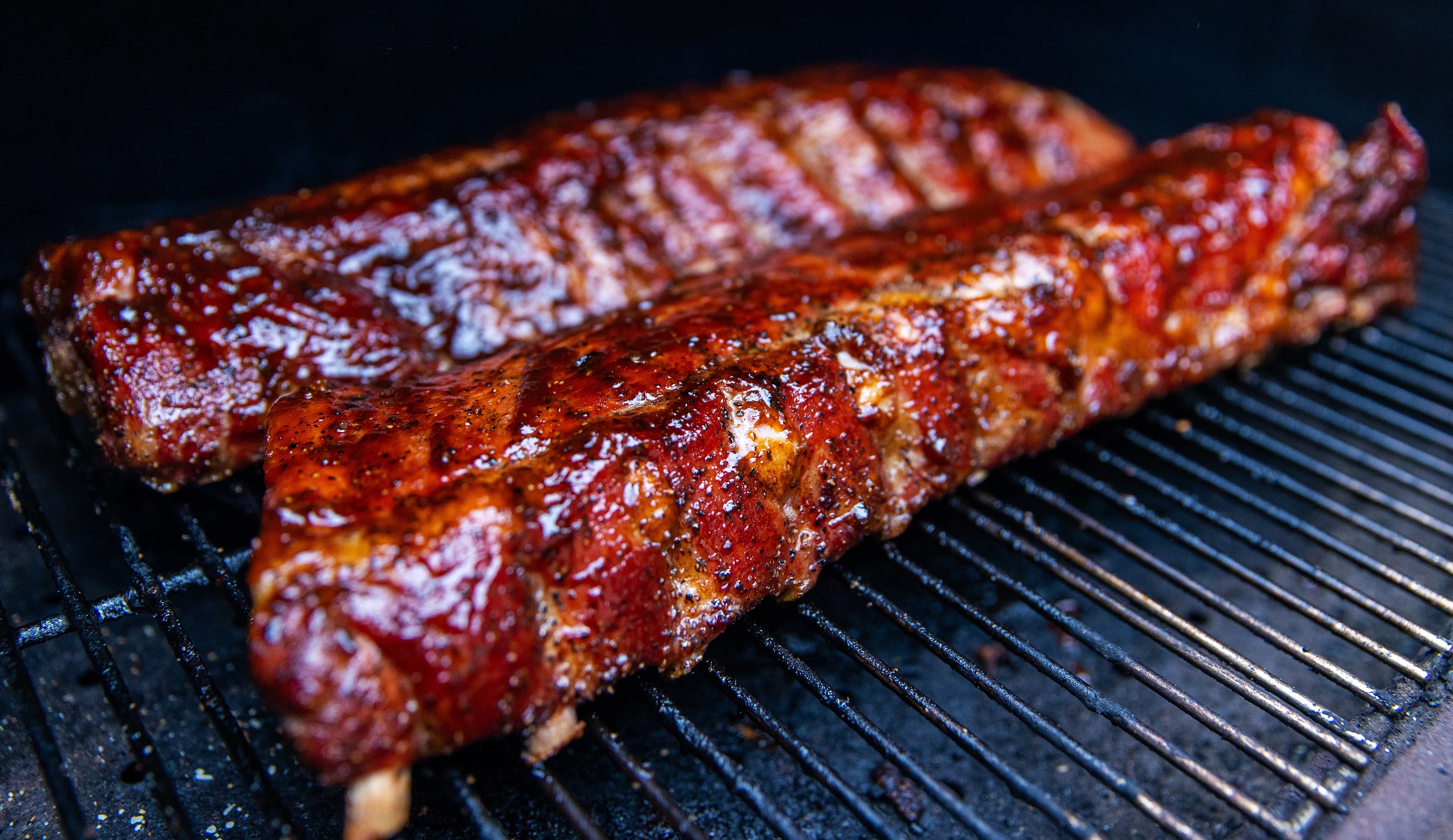
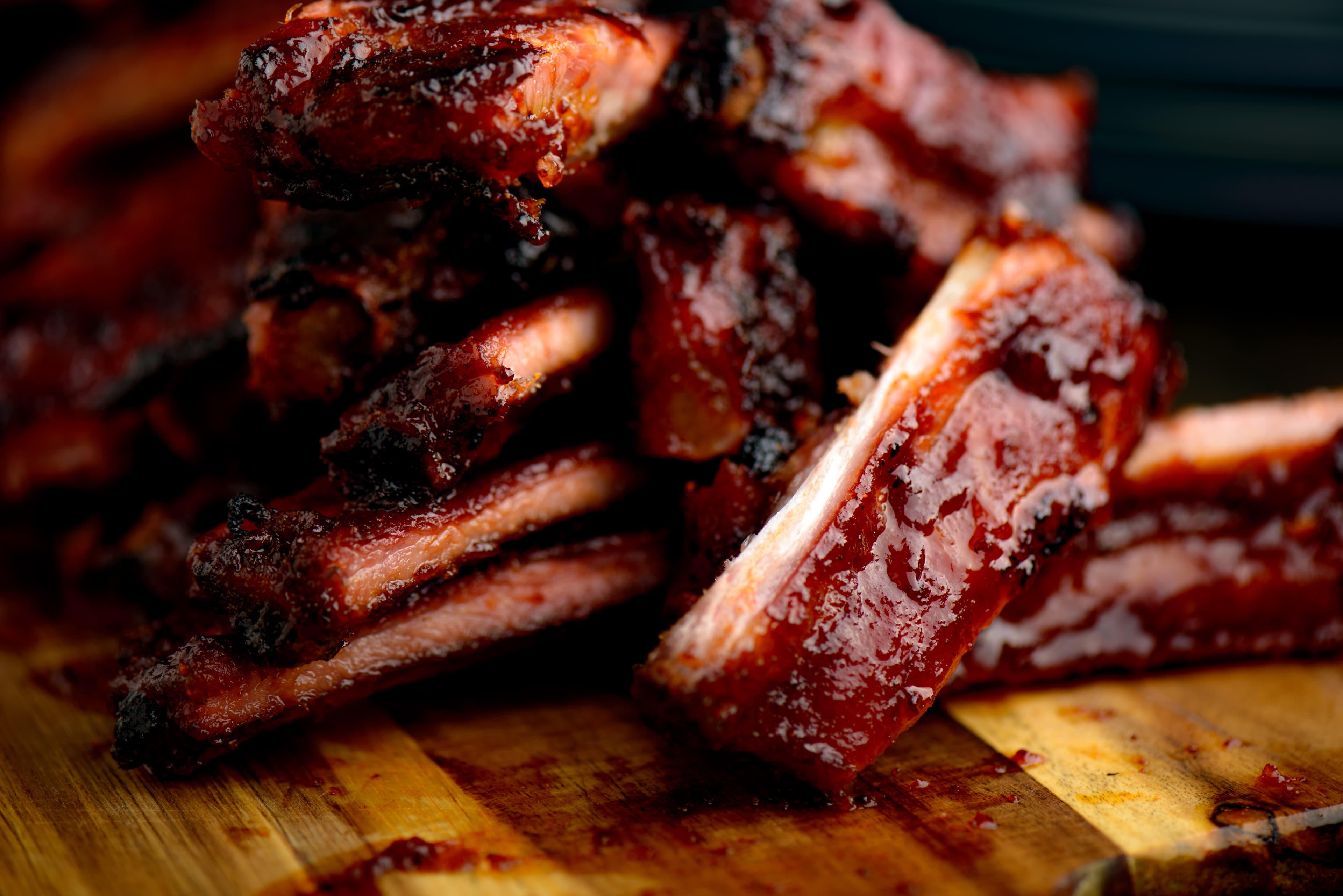
Barbecue is three plates wearing one word. A dry rub—salt, pepper, spice, bark—can meet Habano or a rested maduro. Vinegar, Carolina-style, is acid as a tool; it can lift a midweight the way a cornichon resets salt, if the portion is not a bath. Sweet sauce—molasses, brown sugar, ketchup reduced until it shines—is the dessert fault. Pulled pork in that sauce is not a fuller pairing. It is sugar on leaf sugar. Ribs follow the same split: dry bark is a pairing; a sticky rack is a glaze. If the room brought Texas salt-and-pepper, stay on this page. If the room brought a squeeze bottle, put the cigar down or change the construction.
Char siu and other glazed pork are sugar first. The five-spice can echo Cameroon in theory; in the room the lacquer wins. Eat, wipe, wait. A mild cigar after a pause is more honest than a maduro through the glaze. Sausage is spice already in the casing. A bratwurst or a mild link can sit with shade after. A hot Italian or a peppery fresh sausage can meet Habano. Andouille and a darker smoked sausage have the weight a maduro can take if they are not candied. Mustard is a condiment; a pool of it will make the cigar taste like the jar.
The plates you actually eat
A roast loin or a simple chop, carved, cigar after, is how most honest pairings start. Salt, fat, a brown edge. If that fails, the pork was glazed or the cigar was too loud. The idea of pork and a cigar is not the failure.
A porchetta or a dry-rubbed rib, sauce on the side, is the midweight working plate. Eat, then smoke. The fat on the lips will go into the first third; that can be useful if the cigar has oil, and cloying if the sauce was sweet.
The serious end
A porchetta that was actually roasted until the cap crackled, or a chop from a kitchen that sears instead of painting, is the serious end that does not require a pit. Next to a rested Cameroon or Habano it can be exact.
Country ham, a dry-rubbed rack, or a long roast with real collagen and little sugar is the other end. These plates have the salt and gelatin a maduro or a ligero can meet. They do not need a bourbon pour to prove it. If a glass is already open—a Riesling with the ham, a bourbon after the rib—use those essays for the glass. This page is still the plate and the leaf.
Service
Timing. Light as the plate empties, or with the last of the crackling if the room is unhurried. A cigar through the first cut is how ash lands on jus and the pork tastes like a humidor.
Hands. Fat and sauce will go into the wrapper. Wipe before you pick up the cigar you mean to finish. Barbecue on the fingers is how a maduro tastes like the bottle.
Sauce. On the side if you mean to smoke. A pool of reduction under every slice is how the cigar never starts.
The cousins. If wine is already poured, use the wine essay for the glass. If bourbon is already poured, use the bourbon essay for proof and oak. The cured board is charcuterie. Do not invent a third pairing on top of a glaze.
Ash and pace. Fat and salt make people eat faster and then smoke faster. Slow the cigar. A robusto is enough. The last third next to a second helping of sweet sauce is how sugar and combustion bitter become the only things left.
The box. Roast pork will perfume a small room. Keep the humidor closed until you are choosing. Sweet sauces do not belong near cedar.
Leftovers. Cold roast the next day is a lunch cigar if the construction is mild. Cold rib with a maduro at noon is a different life; possible, not default. Reheated sweet sauce is still sugar.
A pairing map
| Cigar construction | Working plate | Serious plate | Why it holds |
|---|---|---|---|
| Mild. Connecticut shade, light Dominican | Roast loin or a simple chop; cigar after the plate | A refined roast, herbs not glaze | Quiet fat keeps honey and cedar. Barbecue sugar and a honey ham will not. |
| Medium. Habano, Corojo, Sumatra, Cameroon | Crusted chop or porchetta; dry-rub ribs; a peppery sausage | Porchetta with a rendered cap; vinegar or dry-rub barbecue, sauce on the side | Herb, sear, and spice meet wrapper spice. Sweet sauce ruins it. |
| Full. Maduro, San Andrés, ligero-led Nicaraguan | Country ham or a fatty roast; dry-rub bark; a darker sausage | Long-cooked pork with real collagen, little sugar | Leaf molasses can take salt and gelatin. Char siu and a squeeze bottle cannot. |
Faults and mismatches
- Honey-baked ham or a sticky rib on Connecticut shade. The cigar never starts. Wait, or change the construction.
- Sweet barbecue sauce on a maduro. Sugar and smoke fight the wrapper. Dry rub or vinegar was enough.
- Char siu through the first third. The lacquer is the pairing. The leaf becomes candy and then ash.
- Lighting through the first cut. Ash on the plate, pork in the smoke. Neither is improved.
- Using this page to reprint the cured board. Jamón on a platter is charcuterie. Cooked ham is this essay.
- Bourbon as a third pairing on top of sauce. One cousin is enough. The plate is already a pairing.
Beef is louder fat and char. Poultry is quieter skin and jus. The board of cured meat is a different system. If the room has already moved to a plated sweet, use the dessert essay—and leave chocolate on its own page.