
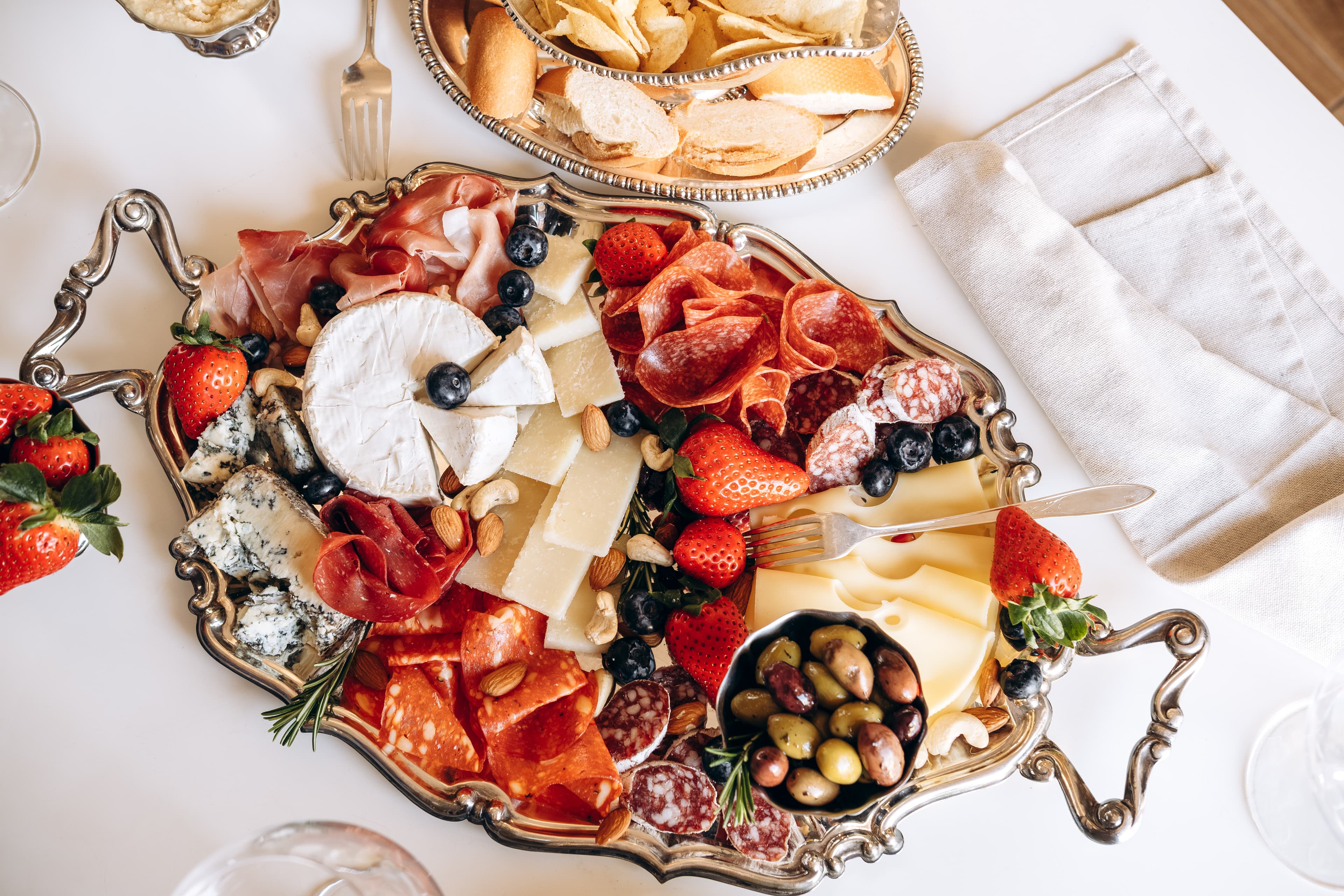
The board is a room. If every door is open, the cigar is a guest who cannot finish a sentence.
How the cigar is built for a board
A board is louder than a single cheese and quieter than a plated savory. It offers many small decisions. The cigar that survives is the one whose construction can take salt and fat without being asked to compete with heat, sugar, and a crowd.
Connecticut shade can sit with the board only if the board is edited: prosciutto or a pale coppa, olives that are not a brine bath, a baguette, a cheddar or young Comté. Hot mustard and a collapsing brie will varnish the honey. Cameroon and Ecuadorian Sumatra have enough spice for soppressata and a proper cornichon. Habano and Corojo are the useful midweight—pepper against a darker salami, cedar against farmhouse butter on a real loaf. Maduro and San Andrés can take jamón with real fat, saucisson, and an aged cheese already described on the cheese page. The danger is the sweet end of the board: fig cake, a jam, a honey. Those belong to dessert, or to no one.
A mild Dominican was not built for a loaded board. Keep the meat pale and the condiments off the smoke. A ligero-forward Nicaraguan wants weight—darker cure, aged paste, bread with crust—or it will treat the board as garnish and ignore it. If the cigar is already that construction, do not add a mild lunch ham and hope the leaf will recede.
How the board is built
By habit, a board is a shopping list: meats, cheeses, fruit, olives, crackers, breads, spreads. For a cigar, those items are axes. Salt and fat are the useful ones. Acid is a reset. Sweet is usually the fault. Starch is furniture—it carries, it does not pair.
Cured meat is salt, fat, and whatever the air or the smokehouse added. A sweet-cured ham is closer to the leaf than a peppered salami. A smoked meat is a second smoke; use it the way the seafood essay uses smoked fish—rarely, and not as a default. Slicing thin is not elegance as theater. It is how fat reaches the palate without a chew that outlasts the draw.
Cheese on the board is not a second cheese essay. One wedge, chosen by the rules already written: milk, age, rind. A supermarket Comté is honest working language. A dripping brie is a fault next to shade, with or without the rest of the spread. If the cheese is the point, clear the meats and go to that page.
Fruit is the usual mistake. Fresh grapes are water and a little acid; they can reset if the portion is small. Dried or candied fruit is sugar. A membrillo next to a mild cigar is the same fault as on the cheese plate. Put it down while the cigar is lit.
Olives are salt and brine. A dry, meaty olive can sit with shade. A bowl swimming in marinade is a third pairing—herbs, garlic, oil—that will follow every draw. Crackers are salt and starch; they are useful as a vehicle and dull as a course. Bread is better. A baguette that tastes of flour and crust will carry butter and ham without adding a flavor of its own. A seeded, sweet, or heavily oiled cracker will.
Spreads decide the evening. Mustard is heat. A Dijon used as a smear can cut fat for a midweight cigar; a hot English or a sweet-hot will cook Connecticut. Butter is fat that tastes of cream—useful, especially a farmhouse butter on a real loaf. A jam, a chutney, a honey is dessert. The chocolate and dessert essays already hold sugar. Do not smuggle it onto the board and call it charcuterie.
The board you actually set
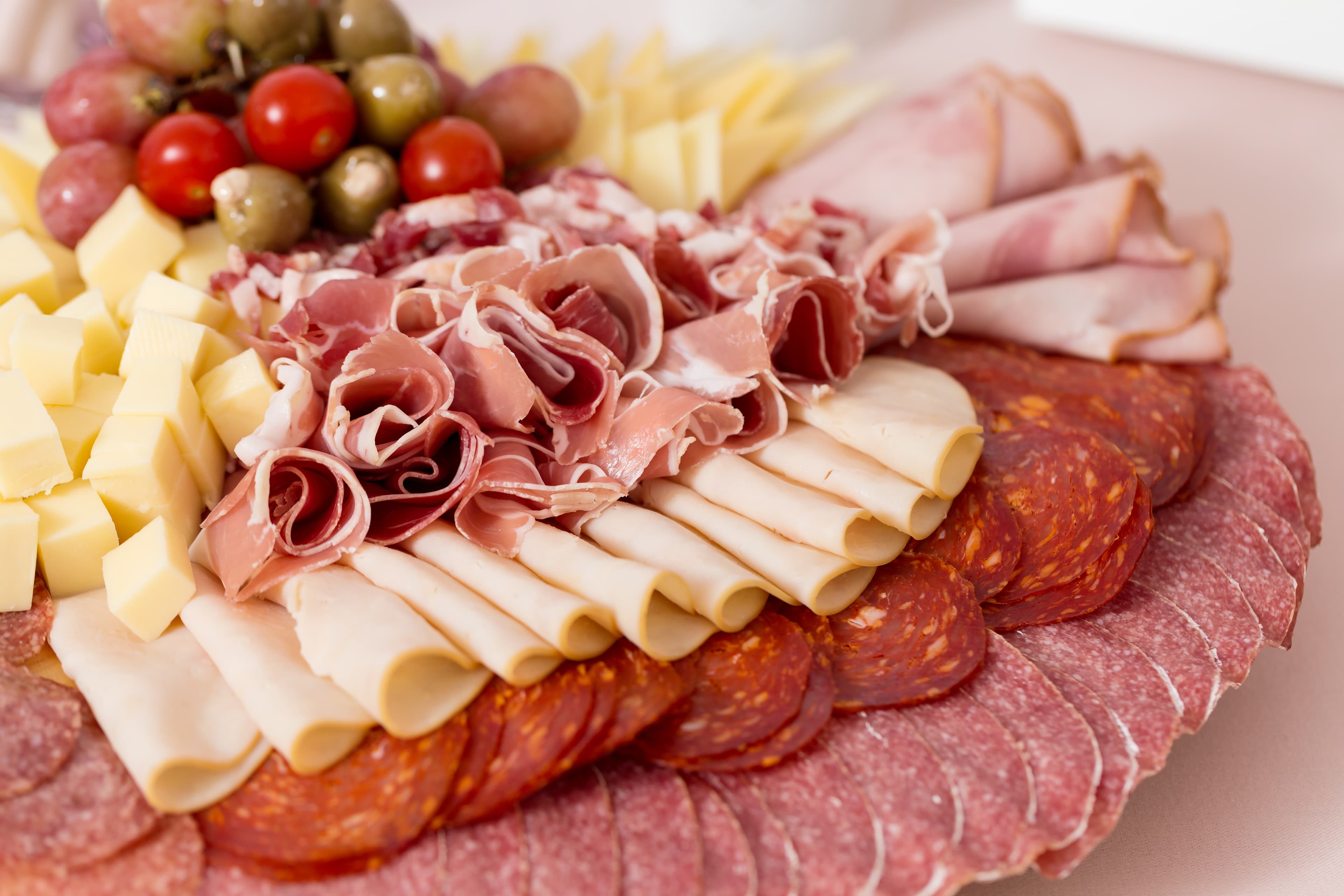
Prosciutto, sliced thin, is the working ham: sweet cure, fat that melts, almost no smoke. It will extend a shade wrapper if the rest of the board stays quiet. Soppressata or a modest salami is the working midweight—pepper and fat for Habano. Olives that you would eat without a cigar. A baguette, not a cracker assortment. A supermarket Comté or an honest cheddar, one wedge. That is a board a cigar can finish.
It is not a lesser board. It is how the pairing actually starts. If it fails, the condiment or the construction is wrong, not the idea of a spread.
The serious end
Jamón ibérico—the fat translucent, the slice almost a film—is the precise version of the working ham. It has acorn sweetness and a length that a rested maduro or a refined Habano can answer. It is wasted on a canoeing ligero and ruined by a sweet spread. Saucisson from a house that still tastes of pork and pepper, not of a spice rack, is the midweight’s serious cousin.
Proper cornichons are acid as a tool: small, dill, a clean vinegar. They reset salt the way green tea resets soy on the sushi page. A sweet pickle is sugar again. Farmhouse butter on a loaf with a real crust is more useful than a third meat. A serious loaf—pain de campagne, a baguette from a baker—gives the fat somewhere to go. Industrial bread is starch without a point.
The haute board is still these axes, better sourced. It is not a longer shopping list. If the table has added a second cheese, a second jam, and a bowl of candied nuts, you have written three essays at once. Edit.
Wine on the board
Wine is a service note, not a second wine article. A modest Rioja or a village Burgundy can sit with ham and a midweight cigar if the tannin stays polite. A young, extracted red will stack tannin on combustion and on salt. If the bottle is the point, leave this page and use the wine essay. Champagne is a different pressure; it has its own Conservatory page. Do not pour vintage port onto a board and a Connecticut as a gesture.
Service
Sequence. Set the board. Eat a little. Then light, or light after a pause if the first bites were mustard or a ripe cheese. The cigar should not be a prop during the unwrapping of every packet. Two or three items while it burns is a pairing. Grazing for an hour with a ligero in the ashtray is how the leaf becomes a room scent.
What to put down when the smoke is on. Hot mustard. A brie that has started to run. Candied fruit. A sweet spread. A smoked meat if the cigar is already a full smoke. You can return to them after. Hospitality is not the refusal to edit.
Temperature. Cool room for the meats; cheese as the cheese essay already said. Fat that is refrigerator-cold tastes of wax. Fat that is warm in a sunny room tastes of the room.
Ash and pace. Salt makes people drink and draw faster. Slow both. Bread helps. A robusto is enough; a long figurado on a snack board is a mismatch of ambition.
Siblings. Cheese has its own page—milk, age, rind. Almonds if the nut is the point. Chocolate and plated dessert if sugar has entered honestly. Wine if the glass is doing more than rinsing salt. This essay will not reprint them.
A pairing map
| Cigar construction | Working board | Serious board | Why it holds |
|---|---|---|---|
| Mild. Connecticut shade, light Dominican | Prosciutto, olives, baguette; a quiet cheddar or young Comté. Mustard and brie down. | A pale coppa or a clean jamón, sliced thin; bread that is bread | Sweet-cured fat extends honey. Heat and sugar will not. |
| Medium. Habano, Corojo, Sumatra, Cameroon | Soppressata, cornichons, supermarket Comté, a dry olive | Saucisson, proper cornichons, a real loaf, farmhouse butter | Salted fat and a little acid meet pepper. A sweet spread hides the cedar. |
| Full. Maduro, San Andrés, ligero-led Nicaraguan | A darker salami; aged cheese; olives; bread, not crackers only | Jamón ibérico, saucisson, a serious loaf, butter that tastes of cream | Cured fat and aged paste can take oil. Candied fruit makes pastry of the board. |
Faults and mismatches
- Hot mustard on Connecticut shade. The wrapper tastes like the condiment and then like pitch.
- A drippy brie as the centerpiece next to a mild cigar. Cream without structure. The next draw is muted. The cheese essay already called this.
- Candied fruit or a sweet spread. Sugar is the fault on a board as it is on a dessert plate. Put it down or change the hour.
- Smoked meat plus a full cigar. Two smokes. The pork becomes a rumor.
- Using this page to reprint cheese or wine. Those pairings are written. This page is the system they sit inside.
A board can be a whole evening if it is edited. If it is a pile, the cigar will lose to the loudest thing on it—usually mustard, sugar, or a washed rind. The pairing desk will send you to the family you actually poured or sliced.