
Mold vs. Plume on Cigars: How to Tell the Difference

Plume is a dry bloom. Mold is a living one. They can share a color in a bad photograph and share nothing in the hand. One wipes into a cloth and leaves the wrapper. The other has structure—fuzz, a foot, a stain that smears. The difference is not a debate. It is a touch you can do once, carefully, and then stop touching.

The principle Use a clean dry cloth on a discreet spot. Powder that vanishes is plume. Fiber, smear, or color that stays is mold. Isolate anything you will not bet the rest of the box on. Do not take a vote in a group chat as microscopy.

The cloth is the instrument. The story is not.

How the two are built

Plume—people also say bloom—is oils and a dry deposit that can appear on a cigar that has rested. It looks like a faint frost. It is not a prize, and it is not a disease. It is a note that the leaf has been still. Mold is an organism that found water and still air. It can be white, blue-green, gray. It can sit in the foot, along the seam, under the band. It has height. Plume does not grow a pile.

Light helps. A raking lamp shows texture. A phone flash flattens it and starts arguments. If the deposit is even, dry, and gone after a light wipe, you are done. If it is patchy, wet-looking, or rooted in a puncture, you are not looking at a compliment from time.

Smell is a secondary clue, not a sport. A moldy box can smell sweet-wrong or cellar-wrong. A clean box with plume smells like leaf. Do not bury your face in a suspect stick. You already know how to isolate.

The working language

Most false alarms are a dusty band or a little ash from a neighbor. Most missed mold is a foot you did not turn over. Make turning the cigar part of putting it back. If you only ever see the band, you will only ever see the band.

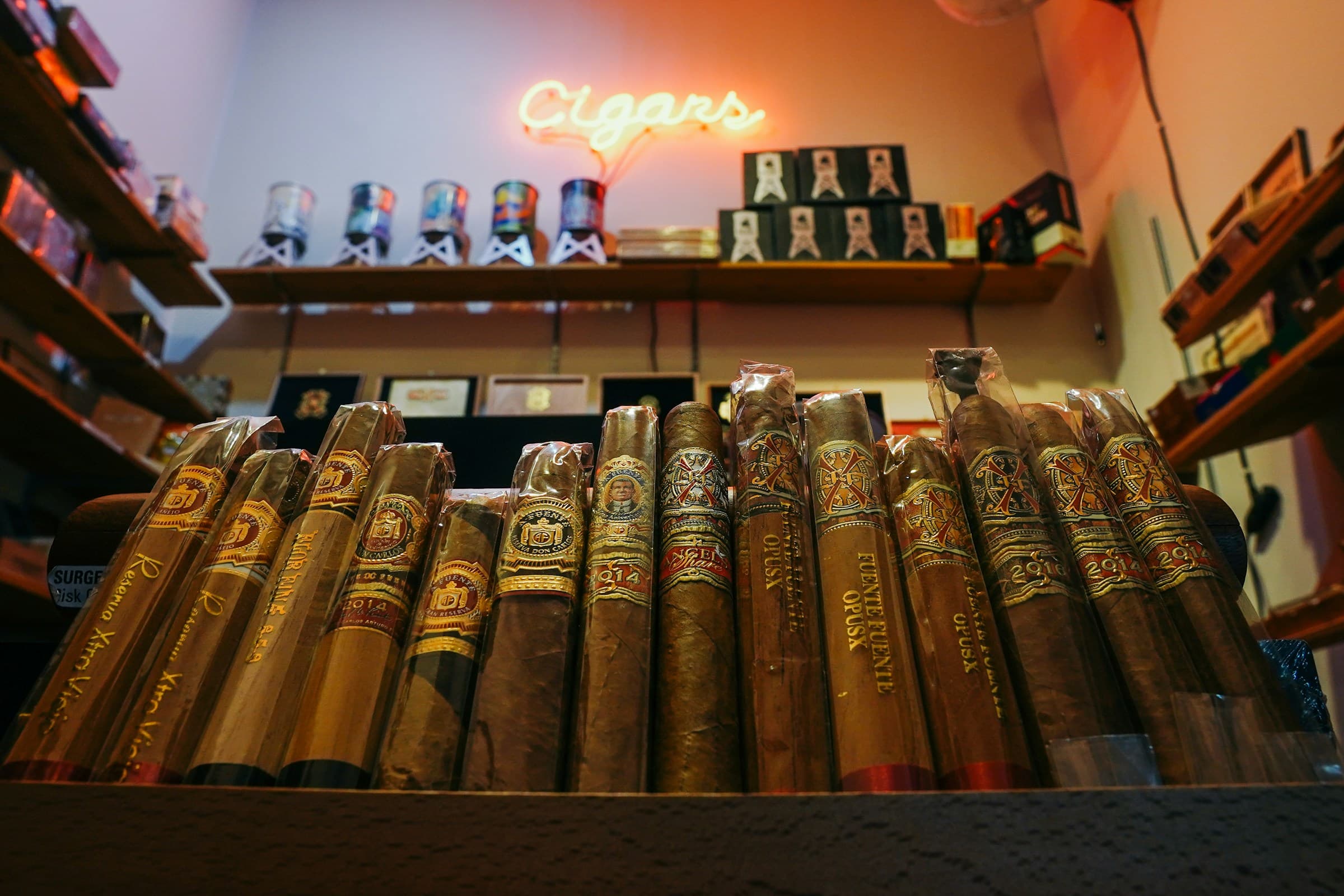
Cigars on a shelf, wrappers visible, easy to turn and see.
See the wrapper. The foot and the seam are where stories start.

A new arrival that looks dusty after a long mailer may be neither. It may be warehouse dust. Wipe, isolate if you are unsure, rest it apart for a week. A cigar that has sat calmly for two years and shows a faint even frost is the usual plume case. A cigar that spots two weeks after you raised the RH is the usual mold case. History is evidence. It is not a substitute for the cloth.

If several cigars agree, believe the box. If one cigar disagrees with a calm box, believe the journey or the foot. The checklist essay is the short version of this page. Use it when you do not want prose. Use this page when you want to stop guessing.

Color is a liar in both directions. White can be frost or felt. Green is easier and still not a photograph you send to a group. Blue-green on a foot is not a debate. Gray that looks like dust on a band may be the band. Turn the cigar. The foot and the seam are where organisms start because that is where air and moisture linger. The band edge is where people look because that is what they see in the tray. Look where the cigar was not performing.

Under the band is a special case. A tight ring can trap a little damp and grow a line you will only find when you smoke. If a cigar has sat years with a tight band in a swingy box, peek when you take it out to rest it, not as a ceremony. If you find a line, isolate. If you find nothing, you have not ruined a collectible. You have looked. The checklist is the order. This page is why looking is not optional folklore.

Plume as a trophy is how collections get fuzzy feet. Some houses never show frost. Some leaf shows it after a still year. Neither is a grade. Do not buy “plume” as a listing. Do not keep a pile because someone on a forum said it was bloom. The cloth does not care about the listing. The cloth cares about structure.

History you can use: a faint even frost after two quiet years in mid-60s is the usual plume case. Spots two weeks after you raised RH, or after a mailer, or after a tank you forgot, are the usual mold case. A single new arrival in a clean herd is the crate. The factory-to-box essay is that door. Do not let a pretty identification speech replace a quarantine.

What you do not do: scrape with a knife; wet the cloth; taste the spot; take a macro photo and wait for consensus while the stick sits in the herd. Consensus is slow. Organisms are not. Isolate first. Read later. If you were wrong and it was dust, you have lost a week of tray space. If you were right, you have kept a cabinet.

Mineral scale from tap in a reservoir can look like frost on cedar and is not plume on a cigar. The pitcher essay is that kettle dust. Do not use this page’s cloth test on wood the same way you use it on a wrapper. Wood gets wiped and dried as furniture. Leaf gets a discreet touch and a decision. Mixing the two tests is how people scrape a cigar raw and leave a tank film for later.

If you live with someone who “knows plume,” give them the cloth. Knowing is the wipe. A household that argues from memory will keep a fuzzy foot. A household that isolates first will have a boring box. Boring is the point. The checklist is the order when you do not want this prose. Keep both. Use the short one at the tray. Use this one when you need to stop guessing.

A decade of still air can show frost. Two weeks of a wet tank can show felt. Time is evidence, not a substitute for the cloth. If you have never seen either on your own leaf, you are either new, lucky, or not looking at feet. Look at feet. Then wipe one discreet spot. Then decide. The story can wait. The herd cannot wait inside a maybe.

The serious end

The haute is boredom: a collection you can open without a ritual of fear. You know what plume looks like on your own leaf because you have seen it and wiped it. You know what mold looks like because you isolated it once and did not negotiate. Guests do not get a lecture. The box does not get a bleach story.

Service

Raking light. Dry cloth. One spot. Then decide.

Isolate the maybe. The herd is not a place for experiments.

Do not scrape with a fingernail as if you were cleaning a shoe.

Write down what you did if the collection is large. Memory is a poor log.

A working map

Sign Plume Mold Unsure
Texture Dry frost, no pile Fuzz, felt, height Out of the box
Cloth Powders off Smears or stays Treat as mold
Pattern Even, often after rest Patchy, foot, seam, after a wet week Wait apart, look again

Faults and mismatches

  • A phone photo as proof. Flash flattens mold into “maybe plume.”
  • Wanting plume so badly you keep a fuzzy foot. Desire is not a test.
  • Throwing a whole box for one dry bloom. That is how collections get smaller than they need to.
  • Scraping the wrapper raw. You have made a new problem.
  • Asking a crowd to vote. Isolate first. Vote later if you must.

The longer mold essay is causes and cleaning. The checklist is the pocket version. Water and factory handling sit beside both. If you only remember one sentence, remember this: powder that vanishes is one thing; structure that smears is another; hesitation means the stick leaves the herd. The cloth does not care about the band. The herd cannot wait inside a maybe. Look at the foot. Then decide.

Centient

Private list

Occasional notes. No spam.

Confirmation includes unsubscribe. Privacy