
Salt lengthens a cigar. Sugar shortens it. Roast decides which of those you meant.
How the cigar is built for this pairing
Nuts occupy the finish. They do not reset the palate the way coffee acidity does; they coat it, then leave a roasted echo that the next draw can use. That is why they belong with cigars that already have some oil—and why they rescue cigars that are showing a little dry heat.
Connecticut shade has a cedar-and-cream register that raw or pale-roasted almonds complement without effort. Too much salt will make the wrapper taste thinner than it is. Cameroon and Ecuadorian Sumatra have spice; a nut with intact skin and a medium roast will pick up that spice and keep it from floating. Habano can take a darker roast and a more assertive salt, because pepper and toasted skin speak the same language. Maduro and San Andrés already lean toward cocoa and molasses. They can absorb a praline or a honeyed turrón; they do not need one. A salted Marcona next to a maduro is often the more adult choice.
A mild Dominican will be extended, not challenged, by almonds. That is a virtue at the end of a meal when you want the cigar to last without raising its voice. A ligero-forward Nicaraguan can overwhelm a delicate Marcona; give it a darker roast or a salted California almond with more crunch and more skin. Ring gauge is less important than how fast the nut dish empties. People eat almonds the way they eat olives: continuously. Portion the dish as if it were a tasting, not a bowl.
How the almond is built
Variety, roast, salt, and the form in which the nut arrives are four different decisions.
Marcona and the California nut
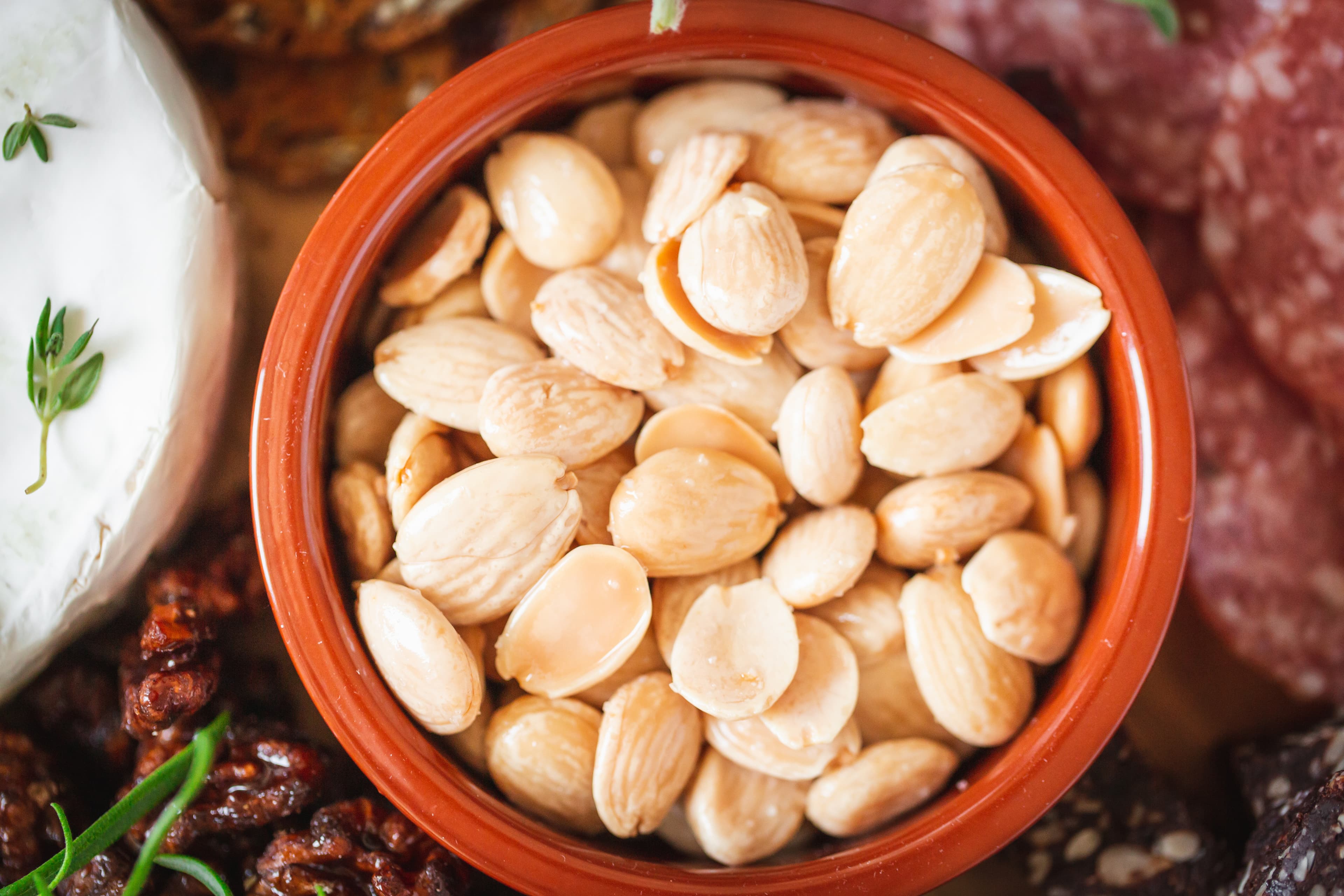
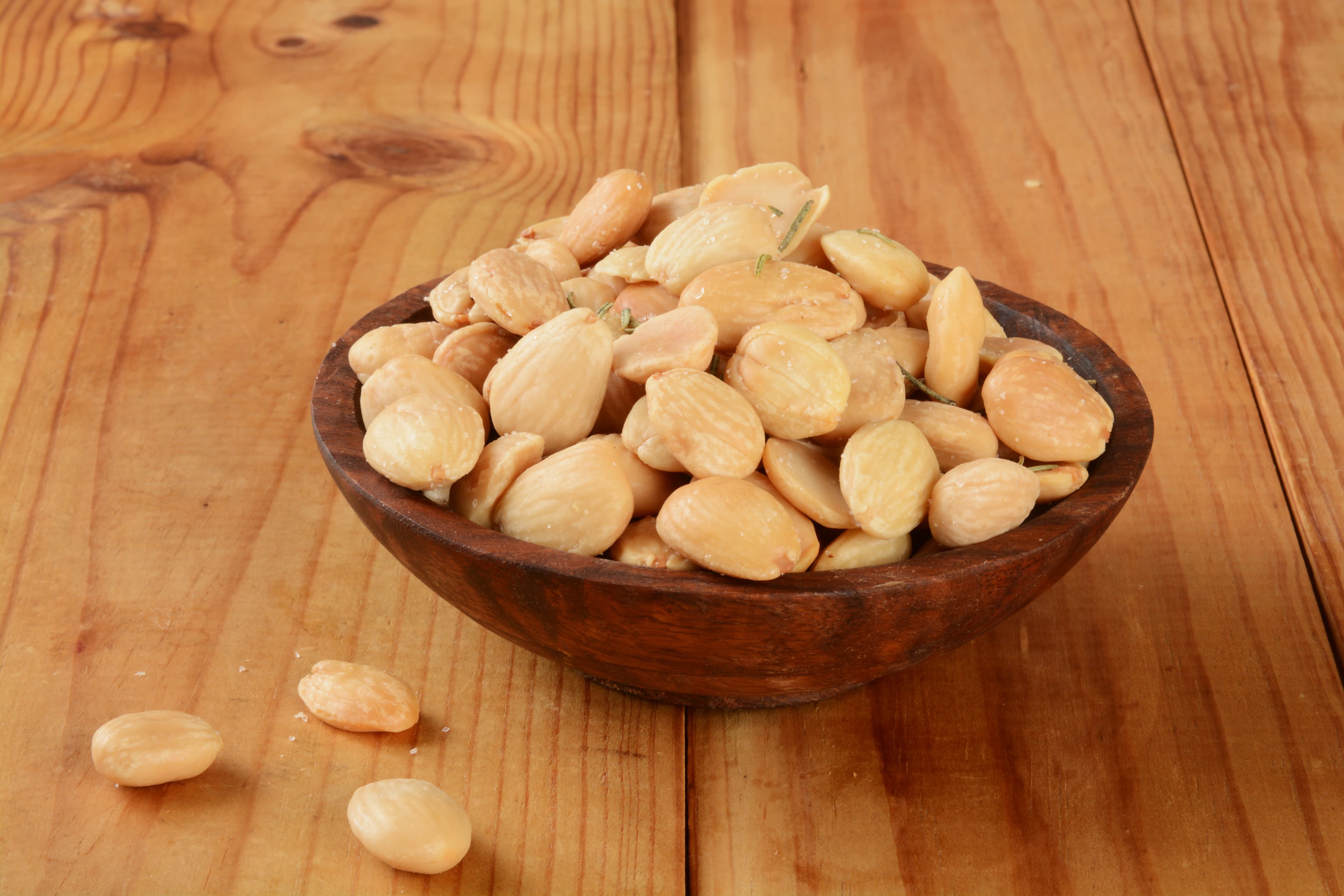
Marcona, the Spanish almond, is shorter, rounder, and higher in oil. Fried or roasted in good olive oil and finished with sea salt, it is the default serious almond: fat that feels like fat, salt that is mineral rather than harsh. It will extend a Connecticut or a medium Habano without adding sweetness. If the oil is stale or the salt is industrial, it tastes like a bar snack and will make the cigar taste like one.
California almonds—Nonpareil and the other commercial cultivars—are longer, drier, and more widely served. They are not a lesser pairing. A well-roasted California almond with the skin on has more tannin and more roast flavor than a peeled Marcona. That dryness can be useful against a richer cigar. Blanched, heavily salted cocktail almonds are the mass-market form. They work if the salt is even and the roast is clean. They fail when they are stale, when they are smoked (liquid smoke against combustion smoke is a cheap echo), or when they are honey-roasted into candy.
Roast, salt, turrón, praline
Raw or very pale roast keeps the nut’s green, milky character. It belongs with shade wrappers and mild Dominicans. It will taste unfinished next to a maduro. Medium roast is the pairing roast: Maillard notes that rhyme with fermented leaf. Dark roast adds bitterness. Use it as you would a darker coffee—with something that has its own sweetness in the leaf.
Salt is the reason almonds belong on a cigar table at all. A little sodium suppresses bitterness and makes the next draw taste sweeter without adding sugar. This is not a trick; it is how the tongue works. Too much salt, or a dusty seasoned coating, dries the mouth and makes the cigar’s last third a chore.
Turrón—the Spanish almond-and-honey confection, hard (Alicante) or soft (Jijona)—is a holiday form with a precise use. The hard style is more nut than sugar if it is made honestly; it can sit with a medium cigar the way a dry biscuit sits with oloroso. The soft, oily Jijona style is closer to marzipan. It wants a maduro or it wants to be eaten after the cigar. Praline and caramelized almonds are sugar first. They are dessert. A single piece at the end of a full cigar can be graceful. A bowl of them is a mismatch.
Smoked almonds, chili almonds, and “cocktail mix” tins add other pairings by stealth. Smoke-on-smoke rarely clarifies. Chili fights Habano. Rosemary can work with a mild cigar if it is actually rosemary and not a powdered seasoning blend.
Service
Temperature and form. Room temperature. A cold nut from the refrigerator tastes waxy. Serve in a small dish, skins on unless the point is Marcona’s pale oil. Provide a place for shells if you have not already removed them; fuss at the table is not hospitality.
Sequence. Light the cigar. Two or three draws. Then a nut. The salt will make the following draw read sweeter. That is the pairing. Do not eat a handful and then try to find the cigar again.
Ash and pace. Fat slows the palate. You will smoke more slowly if the dish is doing its job. Let the ash be long; do not chase the nut with faster puffing.
Time of day. Almonds are an afternoon and evening food. They are also the one pairing that does not require a pour. That makes them useful when the room is not drinking, or when the drink is already decided and you need a bridge that will not argue with it.
If a wine is already open, a dry amontillado or oloroso is the honest cousin: nut, oxidation, little sugar. A Sauternes or a cream sherry next to sweet turrón and a cigar is three honeys. Choose one.
A pairing map
| Cigar construction | Working almond | Serious form | Why it holds |
|---|---|---|---|
| Mild. Connecticut shade, light Dominican, delicate Cameroon | Pale-roast California, lightly salted; blanched if the skin is bitter | Marcona in good oil, modest salt; hard turrón with more nut than honey | Fat extends cream and cedar. Heavy roast or heavy salt would thin the wrapper. |
| Medium. Habano, Corojo, Sumatra | Medium-roast, skin on, even salt | Marcona with a darker fry; a rosemary almond if the herb is real | Toasted skin and pepper agree. Salt keeps combustion bitter from stacking. |
| Full. Maduro, San Andrés, ligero-led Nicaraguan | Darker roast, salted; a single praline at the end if you want sugar | Jijona turrón in a small piece; Marcona still works and is often better | Leaf molasses can take caramel. The nut’s job is still fat and salt, not candy. |
Faults and mismatches
- Honey-roasted or candied almonds with a Connecticut. Sugar lids the wrapper. The cigar tastes like the nut’s coating and then like nothing.
- Liquid-smoked cocktail almonds with anything refined. The smoke is a flavoring. It flattens both the leaf’s combustion and the nut’s roast.
- An endless bowl. Fat saturates. By the second third the cigar is competing with a film of oil that no longer tastes like almond.
- Stale nuts. Rancid fat is obvious next to a clean cigar and will be blamed on the tobacco. Taste the dish before you light.
- Turrón plus a sweet wine plus a maduro. A holiday pile-up. The cigar becomes the driest thing on the table, which is not the same as the most interesting.
Hospitality
Almonds do not belong in the humidor. Oil goes rancid; salt cakes; pests follow pantry goods. Keep the dish in the room where you smoke, not in the box. If you store nuts for service, use an airtight tin away from cedar and away from coffee.
Shells and skins are debris. A small second dish is enough. The pairing should look like a table that expected a cigar, not like a bar that expected a game.