
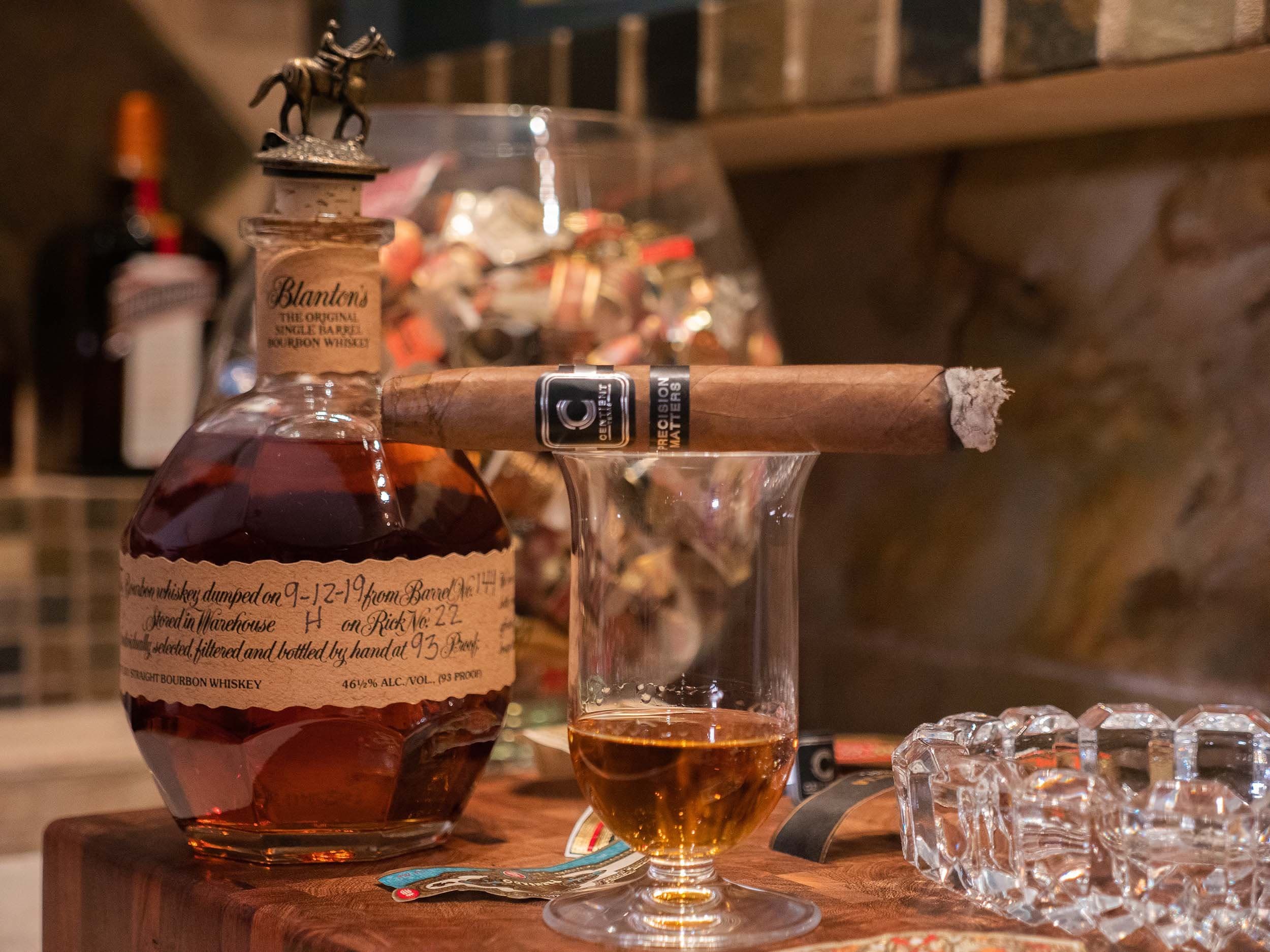
Proof is not character. It is volume. Turn it until both partners can still be heard.
The cigar in this pairing
Bourbon is a sweet spirit by grain and by barrel. It will flatter any cigar that already leans toward caramel and punish any cigar whose only virtue is delicacy.
Connecticut shade can work with bourbon if the pour is gentle: lower proof, less aggressive char, a wheated mashbill or a well-aged bottle whose oak has gone from vanilla to polish. A barrel-proof pour will overwhelm it: the wrapper’s honey and cedar recede, and what remains is grass and heat. Cameroon and Ecuadorian Sumatra have enough spice to meet a standard rye-recipe bourbon without collapsing. Habano and Corojo are the natural midweight partners—pepper against rye spice, cedar against oak. Maduro and San Andrés share bourbon’s caramel and cocoa. The danger is a syrupy conversation: two sweet things agreeing too loudly. A higher-rye bourbon, or a few drops of water, keeps that from happening.
A mild Dominican is a morning-evening problem. Bourbon is rarely a morning drink; the cigar can be. If you pair them, keep the pour small and keep the proof low enough that the whiskey does not talk over the leaf. A ligero-forward Nicaraguan wants more whiskey, not less—more oak, more proof, more spice—or the cigar will treat the glass as a palate cleanser and ignore it. Construction that burns cool matters. A canoeing maduro next to Booker’s is just heat stacked on heat.
How the pour is built
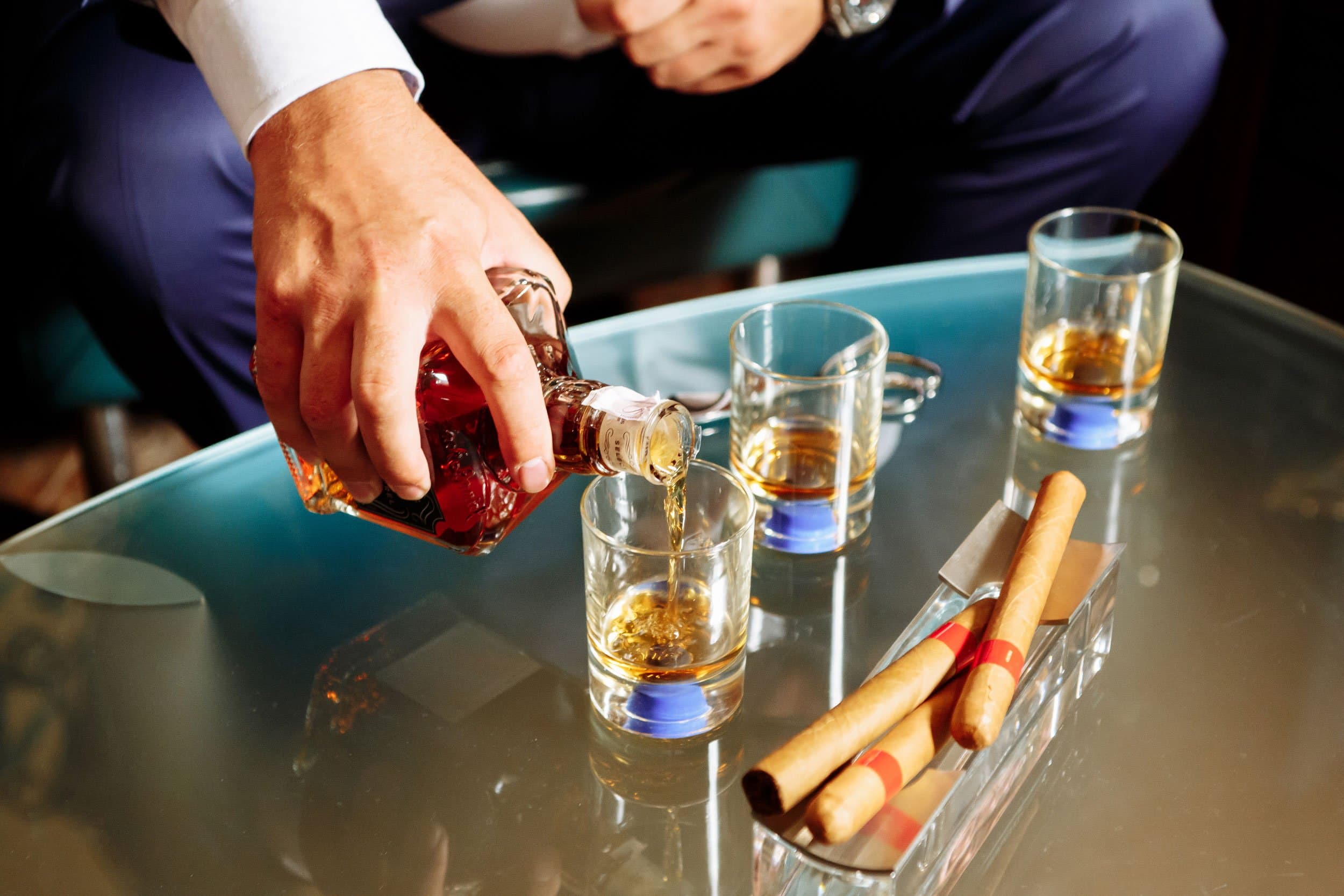
By rule, bourbon is a mash of at least 51% corn, distilled in the United States, aged in new charred oak. Everything that matters for pairing sits in the remaining decisions: how much rye or wheat rides with the corn, how long the barrel sat, where in the rickhouse, and at what proof the bottler stopped.
High-rye mashbills (more rye than a typical bourbon recipe, often in the mid-teens to around 30 percent of the mash) add spice and a drier finish. U.S. bourbon requires at least 51 percent corn; it does not set a rye minimum. Those higher-rye recipes cut a sweet maduro and stand up to Habano. Wheated bourbons replace rye with wheat. They read softer, sweeter, more pastry than pepper. They are kinder to shade wrappers and to anyone who does not want the whiskey to argue. Four-grain recipes (corn, rye, wheat, malted barley) are less common; they can be rounded and a little busy. Pair them as medium-bodied pours, not as statements.
The rickhouse is climate. Higher floors run hotter; barrels there pick up oak faster and taste more toasted. That whiskey will behave like a younger, louder partner next to a cigar. Lower, cooler whiskey can taste more composed at the same age. You cannot always know the floor. You can taste whether the oak is polish or varnish.
Proof is the pairing dial. Bottled-in-bond at 100 proof is a useful middle. Barrel proof—often 120 and up—needs water or a cigar that can take the ethanol heat. Eighty proof is polite and sometimes thin; a full cigar will walk past it.
The bottles you actually pour
Buffalo Trace, bottled at 90 proof, is the working language of a great many rooms: corn sweetness, restrained oak, nothing that shouts. It sits cleanly with a medium Habano or a modest maduro. It is too sweet and too simple for a very delicate Connecticut if you pour it neat and warm; a little water and a smaller sip fix that. Eagle Rare, also 90 proof and aged at least ten years, adds oak polish. The distillery does not publish its mash bills, so treat any claim that the two share a recipe as folklore and taste the glass instead. Eagle Rare is one of the more reliable cigar bourbons on a sideboard because it has enough structure to last through a robusto.
Woodford Reserve (the standard Distiller’s Select, 90.4 proof) is richer, more dessert-oak, a little more barrel-forward. It likes maduro and San Andrés more than it likes shade. Knob Creek 9 Year at 100 proof is the straightforward bonded-strength pour: more rye spice, more heat, good with Habano and with a Nicaraguan that has some ligero. Note that 100 proof alone is not bottled-in-bond, which is a stricter class. If the Knob Creek in hand is a single-barrel or barrel-proof expression, treat it as you would Booker’s—water first, cigar second.
These are not lesser bottles. They are how most pairings actually start. If they fail, the cigar or the proof is wrong, not the idea of bourbon.
Allocated and high-proof
Blanton’s Original Single Barrel, at 93 proof, is a sweet, vanilla-and-oak bourbon with enough baking spice to flatter medium cigars, and it can cloy next to a dessert maduro. Poured blind it behaves much like Eagle Rare, which is not what the conversation around the bottle suggests. W.L. Weller is the wheated line; the Special Reserve you can actually find is 90 proof and softer. It is the right family for a Connecticut or a mild Dominican. The older, scarcer Wellers add oak and proof; they still drink as wheat, not as rye. Pair the proof to the cigar, not the reputation to the box.
Pappy Van Winkle sits at the far end of the same wheated family. Age and wood can be extraordinary. They can also be oak-heavy in a way that stacks tannin on a cigar’s combustion bitter. Older does not mean higher proof here: the 15-year is bottled at 107 and the 23-year at 95.6. That is the strength, and it is all the number tells you. It does not follow that the 23-year is the lighter drink—Buffalo Trace’s own notes for it lead with pronounced wood, where the 15-year reads as leather and fruit finishing on tannin. Proof and presence are different measurements. Either bottle next to a young, peppery Nicaraguan is a waste of both. Next to a rested maduro or a refined, oily Dominican, either can be quiet and exact. Do not save the pour for the loudest cigar in the cabinet.
Booker’s is bottled uncut and unfiltered at whatever the batch comes in at, which in recent releases has meant the 120s: heat, oak, a lot of American whiskey character. Next to a shade wrapper the leaf’s sweetness recedes, and ethanol heat is what you taste. It can be excellent with a full Nicaraguan or a dense maduro if you add water until the ethanol no longer numbs the tongue. The pairing is the diluted glass, not the pour that proves you can take it. Smaller houses and well-chosen single barrels behave like the mashbill and proof they actually are. Ignore the story on the neck tag until you have tasted the oak.
Service
- Glass. A small tumbler or a tulip. The point is to smell the oak without bathing the nose in ethanol.
- Temperature. Cool room. Ice is a choice, not a default. Ice will mute oak and sweetness; it can save a barrel-proof pour next to a medium cigar, and it can make an 80-proof bourbon disappear beside a full one.
- Sequence. Neat first, then the cigar, then decide on water. If you light first, the whiskey’s sweetness will arrive as a surprise and you will over-pour.
- Ash and pace. Bourbon sweetness makes people sip faster and smoke faster. Slow both. A robusto or a corona gorda is enough.
- Time of day. Evening. Bourbon after lunch is possible; bourbon with a morning Connecticut is a different life than most rooms are living.
A pairing map
| Cigar construction | Working pour | Serious pour | Why it holds |
|---|---|---|---|
| Mild. Connecticut shade, light Dominican | Weller Special Reserve or a modest-proof wheated; Buffalo Trace with water | An older wheated bourbon whose oak has gone to polish, not varnish | Wheat and lower sensory proof keep honey and cedar intact. |
| Medium. Habano, Corojo, Sumatra, Cameroon | Eagle Rare; Knob Creek 100; Buffalo Trace neat | A high-rye single barrel; Blanton’s if the oak stays in the vanilla-spice band | Rye spice answers wrapper pepper. Oak should frame, not crust. |
| Full. Maduro, San Andrés, ligero-led Nicaraguan | Woodford; Knob Creek barrel proof with water; a standard bonded | Booker’s cut to a sensory proof you can still taste; aged wheated only if the cigar is rested and oily | Leaf molasses can take corn and char. Ethanol heat cannot be allowed to numb the tongue so the smoke recedes. |
Faults and mismatches
- Barrel proof on Connecticut shade. Ethanol heat numbs the tongue. The wrapper’s sweetness recedes; what remains is grass and heat.
- A dessert maduro with a very sweet, low-proof bourbon. No contrast, no lift.
- Young, heavy-char bourbon with a dry, refined Dominican. New oak tannin stacks on combustion.
- Ice in an already-thin pour next to a full cigar. The whiskey becomes a cold suggestion.
- Treating an allocated bottle as a pairing flex. The cigar cares about proof and oak.
Rye whiskey, Irish pot still, and Japanese whisky are not bourbon with a different label. They have their own essay. Scotch is a different grain, a different cask culture, and a different set of mistakes. Do not borrow those bottles to “upgrade” a bourbon pairing that is already working.