
If the bottle needed a region to explain it, the cigar needs that region too. Do not borrow bourbon’s rules.
How the cigar is built for this pairing
These whiskeys are generally drier or more spicy than bourbon, and less phenolic than peated Scotch. That makes them useful when a cigar is already sweet—or when you want lift without bubbles.
Connecticut shade can take a gentle Irish blend or a polite Japanese malt. It will struggle with a high-proof rye. Cameroon and Sumatra like rye’s dryness and Irish pot still’s spice in moderation. Habano and Corojo are rye’s natural partners: pepper for pepper, a dry finish that keeps the smoke from going brown. Maduro and San Andrés can take Irish pot still’s weight and a richer Japanese pour; they can also go slack next to a very sweet, low-rye “whiskey” that is really a dessert blend. A ligero-forward Nicaraguan wants the firmer ryes and the heavier pot stills. A mild Dominican wants the opposite: Midleton’s silk, a Hibiki-style blend, a rye that has been tamed with water.
Rye
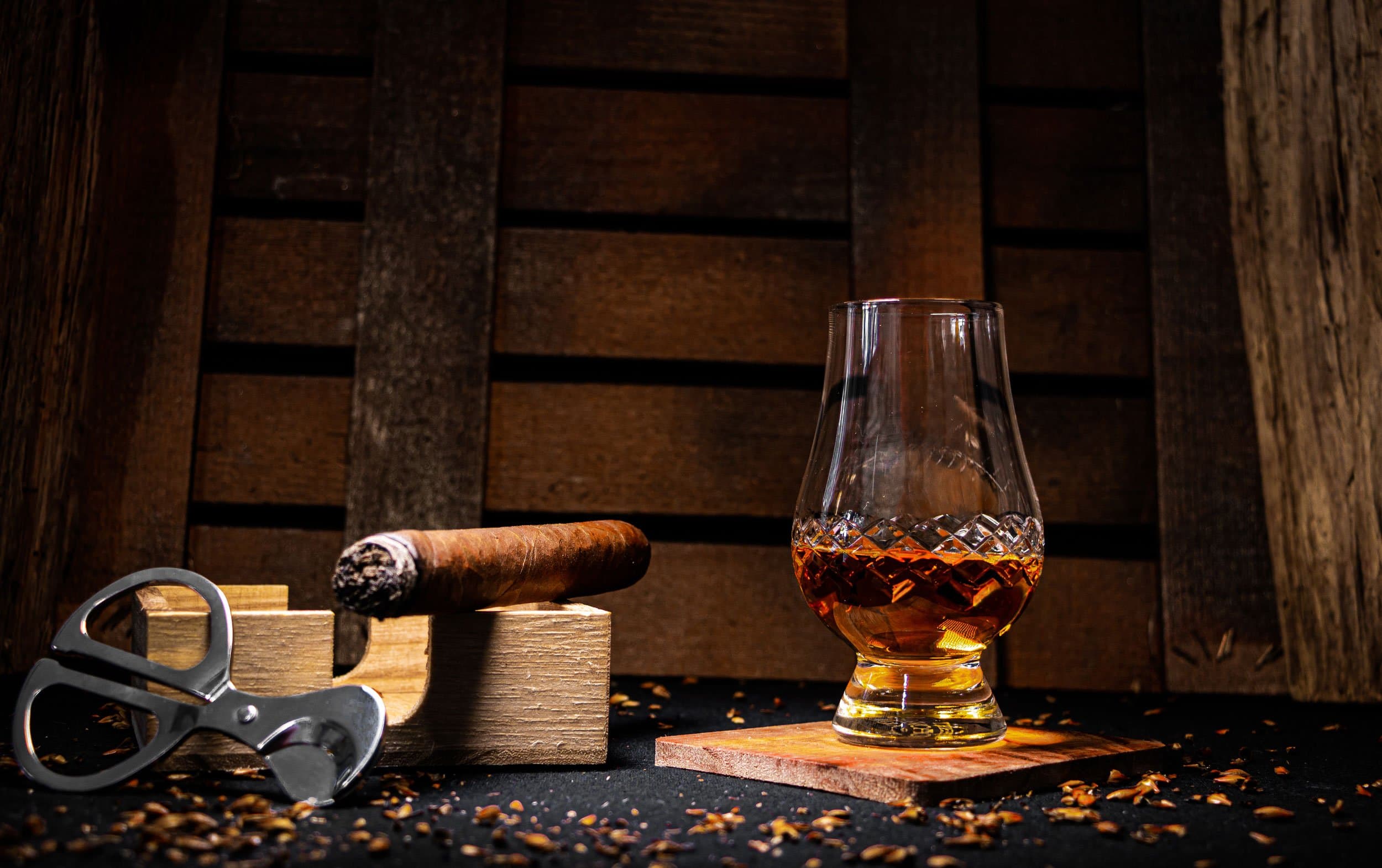
American rye is, by rule, at least 51% rye grain. In practice the bottles that matter for cigars are the ones that still taste of rye: spice, a little mint or dill in some houses, a drier oak than bourbon’s vanilla cake.
Sazerac Rye (the widely seen 6-year-range bottling) is the working pour: dry enough to cut a maduro’s molasses, polite enough for a medium Habano, a little light for a very full Nicaraguan unless the cigar is already showing sweetness. Michter’s rye—the standard US*1—is rounder, a bit more oak-sweet, easier next to a Cameroon or a milder Habano. Pikesville is higher proof and more clearly rye. It is one of the better cigar ryes because it has enough force to last through a robusto without turning into ethanol if you give it a drop of water.
Older or more allocated ryes (the longer Michter’s statements, barrel-proof special releases) add oak and heat. Pair them as you would a high-rye bourbon at barrel proof: water, a full enough cigar, no Connecticut. Canadian rye-forward whiskies, when they are actually rye and not a sweet blend, can be cleaner and lighter; they belong with milder cigars and smaller pours.
Rye’s job next to a cigar is contrast. If you wanted complement, you would have poured bourbon. Do not sweeten the pairing with a dessert cigar and a dessert rye cocktail. Neat, or with water, is the pairing. A Manhattan is another article.
Irish pot still
Single pot still Irish whiskey is a mash of malted and unmalted barley, distilled in a pot still in Ireland. The unmalted barley gives a spicy, oily texture that is closer to food than to perfume. That texture is why it works with cigars that would shrug off a light blend.
Redbreast 12 is the working language: orchard fruit, spice, a little sherry if the casks contributed, enough body for a medium Habano or a modest maduro. It is more forgiving than a high-rye and more interesting than a generic Irish blend. The 15 and the cask-strength expressions add weight and oak; they move toward full cigars. Midleton Very Rare is the polished, annual, blended-and-pot-still luxury pole—silk, not peat, not rye snap. It belongs with a refined Dominican or a well-behaved Connecticut, not with a ligero stack. You are pairing composure with composure.
Jameson and the standard blends are not dismissed; they are lighter. A well-made blend can sit with a mild cigar after dinner when nobody asked for a lecture. It will vanish beside a full Nicaraguan. If the bottle is a sherry-finished pot still, treat the cask as you would in Scotch: dried fruit for maduro, restraint for shade.
Japanese whisky
Japanese whisky, at its best, is malt (and sometimes grain) handled with a fastidiousness about wood and blend. At its worst, it is a label attached to a shortage and a story.
Hibiki Harmony is the popular-luxury pour you will actually be handed: blended, floral, slightly sweet, very smooth. It is closer to a refined, unpeated blend than to a cask-strength malt. Pair it with Connecticut, Cameroon, or a mild Dominican. A full maduro will walk over it. Yamazaki Distiller’s Reserve and the 12, when they are in the glass and not only in the conversation, have more malt and more oak. They can meet a medium Habano. The older Yamazaki statements behave like serious, often bourbon- and sherry-cask malts: pair by wood and weight, as you would a good Speyside, not as you would “Japan.”
Karuizawa is largely a closed-distillery myth in the rooms that still say the name. What is left is auction culture. If a bottle is actually open, it will be old, woody, and specific; pair it like a silent-still Scotch—slowly, with a cigar that will not shout, and do not pretend the pairing is repeatable. The drinkable Japanese whisky in 2026 is the one you can still buy and pour: Hibiki, a Yamazaki that exists, a Chita grain, a well-made blended malt from a house that still has stock. Pair those honestly.
Some Japanese bottles are heavily sherried or finished in plum or wine casks. Wine finishes are a different pairing and often a worse one; the cigar already has enough competing sweetness. Stay with oak unless you know the finish is dry.
Service
Glass. Tulip for malt and pot still; a small tumbler is acceptable for rye if you still nose it. Highballs are a Japanese service tradition and a summer drink. A highball can work with a mild cigar because dilution is already decided. It will not work with a full one.
Water and ice. Rye at 100-plus proof wants water. Irish cask strength wants water. Hibiki often wants nothing. Ice in a highball is the point; ice in Midleton Very Rare is a different decision than ice in Pikesville.
Sequence. Rye first, then the cigar—you need to know how dry the grain is. Irish and Japanese can go either way. Do not chase rye with sweet turrón; you will have cancelled the rye.
Time of day. Rye is an evening cut. Irish pot still can sit after a meal without feeling like a nightcap argument. Japanese blends are the most flexible of the three, including late afternoon with a milder cigar.
A pairing map
| Cigar construction | Rye | Irish | Japanese |
|---|---|---|---|
| Mild. Connecticut, light Dominican | Sazerac with water, or skip rye | Midleton Very Rare; a gentle blend | Hibiki Harmony; a light grain |
| Medium. Habano, Cameroon, Sumatra | Michter’s; Pikesville with a drop of water | Redbreast 12 | Yamazaki Distiller’s Reserve or 12, if that is the bottle |
| Full. Maduro, ligero-led Nicaraguan | Pikesville; a barrel-proof rye cut to taste | Redbreast 15 or cask strength | An older, wood-forward malt—not Harmony |
Faults and mismatches
- High-proof rye on Connecticut shade. The same ethanol fault as barrel-proof bourbon, with less sweetness to hide it.
- Hibiki or a silk blend with a full ligero cigar. The whisky becomes water with perfume. The cigar was always going to win.
- Calling Karuizawa as if it were a house pour. If the bottle is not in the glass, it is not in the pairing.
- A sweet Irish cream liqueur. That is dairy and sugar. It is not pot still. The cigar will taste like the liqueur’s vanilla and then like ash.
- Using this essay to smuggle in bourbon or Islay. Those bottles have their own rules. Mixing them here is how pairings get sloppy.
Canadian, Indian, and other whiskeys exist and can be excellent. Pair them by grain, cask, and proof—the same three questions—not by the novelty of the map. If the drink is peated, use the Scotch peat rule. If it is corn-sweet and new-oak, use the bourbon rule. If it is rye-spicy, stay on this page.