
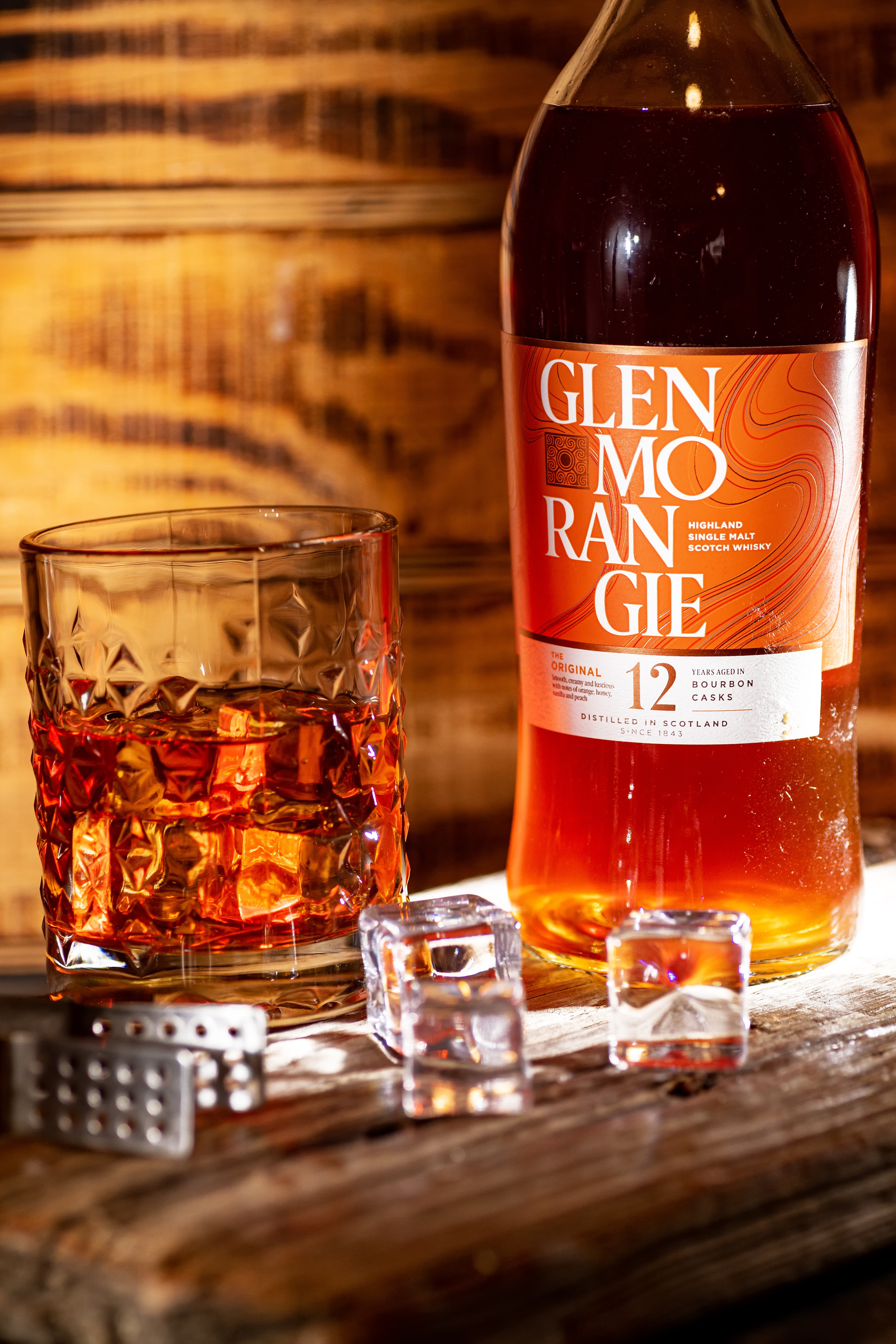
An Islay will not make a mild cigar more interesting. It will make it absent.
How the cigar is built for this pairing
Scotch is less sweet than bourbon by grain and more various by cask. That variety is why a single “Scotch and cigars” rule fails.
Connecticut shade needs malt, not medicine. A Speyside or Highland whisky from refill bourbon casks—honey, apple, a little oak—will lift the wrapper’s cream. A heavily sherried or heavily peated malt will flatten it. Cameroon and Ecuadorian Sumatra can take a little more wood and a little more weight: a sherried Speyside at the elegant end, or a Campbeltown with industrial grit rather than peat blast. Habano and Corojo meet spice with spice; a firmer Highland, a lightly peated Island malt, or a bourbon-cask whisky with more oak will hold. Maduro and San Andrés are the sherry-cask cigars: oloroso and PX notes already live in the leaf’s molasses. A peat bomb next to them is a choice, not a complement—two smokes, one of them bottled.
A mild Dominican is easily overshot by first-fill sherry and by young, hot peat. A ligero-forward Nicaraguan can take both, and will ignore a gentle 12-year Speyside if you pour it as if it were water. Rest the cigar. A green stick plus a phenolic whisky is ammonia plus iodine. Nobody asked for that.
How Scotch is built
Malted barley, usually twice distilled, aged in Scotland, often in casks that already lived another life. The pairing questions are which life, how active the wood still is, and whether peat was in the kiln.
Bourbon casks (ex-American oak) give vanilla, coconut, honey, and a relatively dry frame. They are the default friend of milder cigars. Sherry casks—oloroso especially, PX when the distillery wants dessert—give dried fruit, walnut, spice, and a darker sweetness. First-fill butts are loud; refill butts are polite. A cigar cares which one you poured. Peat is not a region so much as a decision. Islay made it famous. Other coasts use it. Measured in phenol parts per million, it runs from a hint to a wall. The cigar cannot negotiate a wall.
Age statements are not a pairing guarantee. A 12-year can be better with a cigar than a 25-year if the older whisky is all wood and no malt. A 25-year sherry monster can be extraordinary next to a rested maduro and wasted next to a young Habano. Independent bottlers and silent-still releases matter because they often show cask and distillate more nakedly than a house’s travel-retail blend. They are not automatically “better.” They are more specific—and specificity is what a pairing needs.
The bottles you actually see
Glenfiddich 12 and the standard Macallan 12 (sherry-oak or double-cask, depending on the market) are the working language. Glenfiddich is the cleaner, apple-pear, bourbon-cask conversation: safe with Connecticut and Cameroon, thin next to a full Nicaraguan. Macallan 12 in sherry wood is already a darker drink—dried fruit, orange peel, oak. It will meet a medium maduro or a Habano more honestly than it will meet a shade wrapper. Neither bottle is a joke. They are how most rooms begin.
Johnnie Walker Blue is the popular-luxury pole: a blended whisky built for silk, smoke in the background, gift-box presence. It is not the same conversation as a 25-year single-malt sherry cask. Blue can be a pleasant, slightly anonymous partner to a medium cigar. It will not teach you anything about peat or wood, and it should not be asked to. If the room is pouring Blue, choose a composed Habano or a modest maduro and do not look for Islay in the glass.
Other blends and widely distributed 12-year malts (Glenlivet, a standard Highland Park, a gentle Islay if it is the distillery’s entry and not the peat special) behave according to cask and phenol, not according to the label’s age.
The serious end
Macallan 18 and the rarer 25 (when they are still a sherry-led malt and not only a wood-management exercise) are first-growth thinking: density, polish, dried fruit, oak that has had time to integrate. They want a cigar that has also had time—a rested maduro, an oily Dominican with years on it, not a pepper-hot new Nicaraguan. The whisky is the louder partner. Let it be.
Springbank is Campbeltown: oily, a little industrial, lightly peated or not, depending on the expression, with a weight that likes food and smoke. It is one of the more complete cigar malts because it has texture. A 10- or 15-year Springbank next to a medium-full Habano is a pairing that does not need a speech. Local Barley and the more obsessive releases are more specific still; pair the texture, not the lottery.
Ardbeg and Laphroaig are peat as the point. Laphroaig leans medicinal and iodine; Ardbeg leans smoke and coffee. These are not “whisky with a cigar.” They are a second fire. Use them with a full, earthy cigar that can take phenols—some Nicaraguans, some dark maduros, a Sumatra with real earth—or do not use them. A Connecticut beside Laphroaig 10 is a disappearance, not a contrast.
Silent stills and independent bottlers (the closed distilleries, the cask-strength single casks from names you already know) are for when you already understand the house and want the cask naked. Cask strength still needs water. A 25-year sherry butt at natural strength next to a mild cigar is the same mistake as Booker’s next to shade, in a more expensive glass.
Service
Glass. A tulip or a small copita. You need to know if the peat is in the room before you light. A tumbler is fine for a blend; it hides a serious malt.
Temperature and water. Cool room, no ice unless the whisky is hot and the cigar is already full. Water is part of Scotch service. It opens cask and turns cask strength into a pairing strength.
Sequence. Nose the whisky first. If peat dominates the glass, choose the cigar after, not before. Then a sip, then the light, then a slower alternation than bourbon usually wants. Peat lingers. So does ash. Give both air.
Time of day. Evening, almost always. A light Speyside with a mild cigar in the late afternoon is the exception, and it should stay unpeated.
A pairing map
| Cigar construction | Working pour | Serious pour | Why it holds |
|---|---|---|---|
| Mild. Connecticut shade, delicate Dominican | Glenfiddich 12; an unpeated Speyside or Highland 12 from bourbon wood | A refined, unpeated malt whose oak is refill or well-integrated; not a first-fill sherry bomb | Malt and light vanilla lift cream. Peat and loud sherry erase it. |
| Medium. Habano, Cameroon, Sumatra, Corojo | Macallan 12; a standard Highland; Blue if that is the bottle on the table | Springbank; a sherried Speyside that still tastes of malt; a lightly peated Island | Spice meets wood. A little phenol can echo wrapper earth without taking over. |
| Full. Maduro, San Andrés, ligero-led Nicaraguan | A richer 12-year sherry-cask malt; Highland Park if the peat stays in the background | Macallan 18 or a serious sherry-aged malt; Ardbeg or Laphroaig only when you want smoke on smoke | Molasses meets dried fruit. Peat is optional and must be intended. |
Faults and mismatches
- Peaty Islay on Connecticut shade. Phenol occupies every receptor the wrapper needed. The cigar tastes like paper and the whisky tastes like a room on fire. This is the classic fault, and it is almost always pride.
- A 25-year sherry monster with a young, hot blend. Oak tannin and ligero heat. No malt, no leaf, only structure colliding.
- Treating Blue as if it were a single-cask sherry malt. Different drink, different job. The cigar will be fine. The conversation will be confused.
- No water in a cask-strength pour. Ethanol numbs. The pairing becomes proof tolerance.
- Ice in a delicate Speyside next to a full cigar. The whisky leaves. The cigar continues alone.
Bourbon, rye, Irish pot still, and Japanese whisky are not “other Scotches.” They have different grains, different laws, and their own essays. If the bottle is a blend that happens to contain malt, pair the blend you poured, not the region you wish it were.