
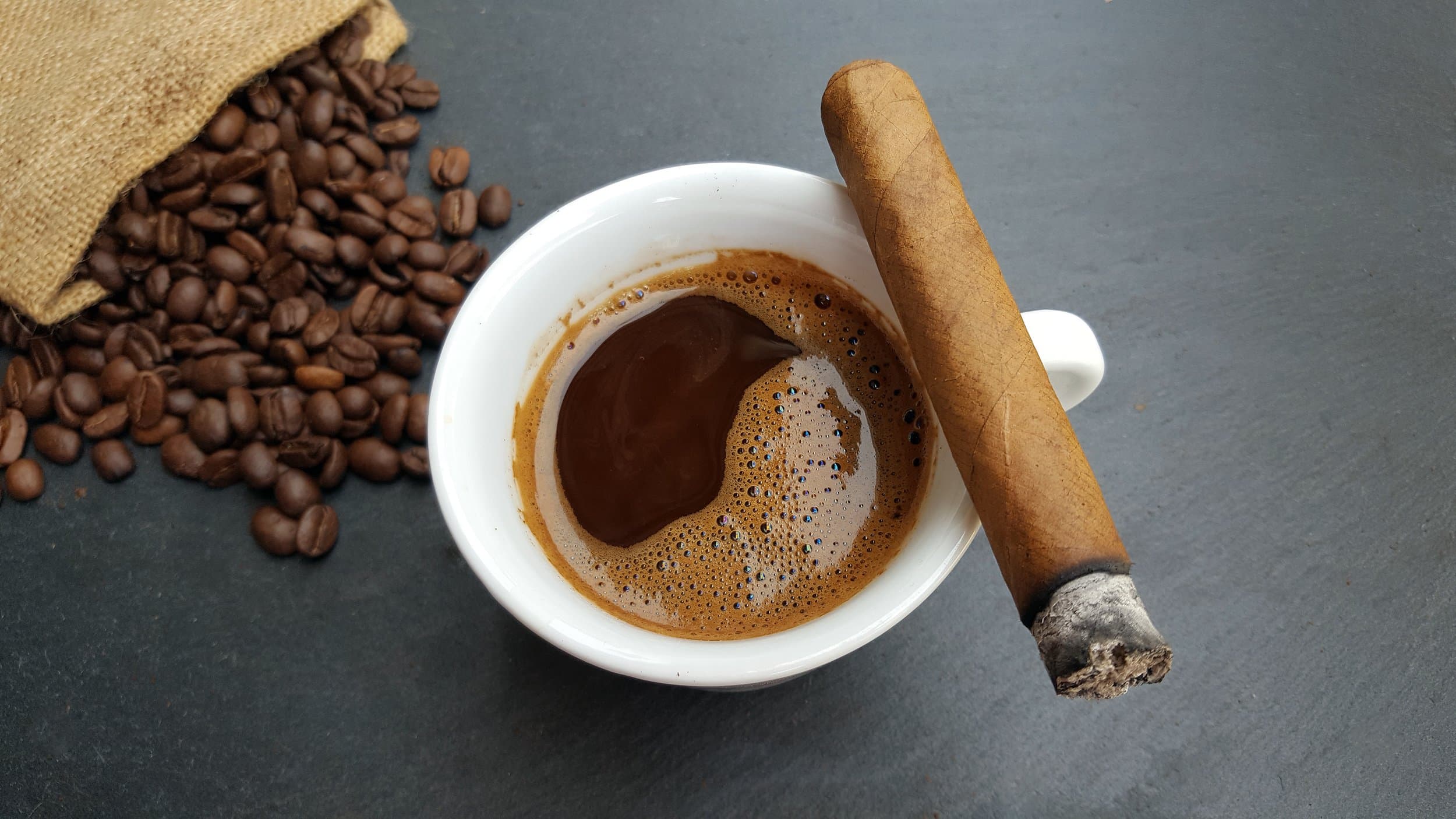
The cup is a tool for pace. If it arrives hotter than the smoke, the cigar will taste like burnt toast.
How the cigar is built for this pairing
Coffee is unforgiving of a cigar that is still settling. A stick that left the box last week, or one stored a few points too wet, will throw ammonia and chlorophyll against espresso’s already-bitter crema. Rest matters more here than with a spirit: there is no water to soften the collision.
Connecticut shade—the Ecuadorian and true Connecticut crops alike—carries hay, cedar, and a thin sweetness. It has little oil to buffer a dark roast. Pair it with washed coffees and moderate extraction, or do not pair it at all. Ecuadorian Sumatra and Cameroon sit in the middle: spice and a little earth, enough body to meet a typical club espresso without collapsing. Habano and Corojo wrappers, especially on medium Dominican and Honduran blends, have the pepper and cedar that espresso’s roast notes can echo without drowning. Maduro and Mexican San Andrés bring cocoa, molasses, and fat. They are the natural partners of a darker roast or a sweetened Cuban coffee—provided the sweetness is in the leaf, not only in the cup.
Filler architecture decides whether the pairing lasts past the first third. A seco- and viso-led Dominican stays articulate with filter coffee through a corona or petit robusto; a ligero-heavy Nicaraguan will outrun a delicate Gesha by the midsection unless you move to a richer brew or put the cup down. Ring gauge is secondary to heat management: a thick robusto smoked too quickly will bitter any coffee. Construction that draws evenly matters more than brand.
How coffee is built
Treat roast as a structural decision, not a badge. Light roast preserves origin acidity and florals; it will lift a mild cigar and pick a fight with a full one. Medium roast caramelizes sugars without turning the cup into charcoal; it is the default pairing roast because it shares Maillard notes with fermented leaf. Dark roast adds carbon bitterness and a heavier body. It can stand next to a maduro. Next to a shade wrapper it simply tastes burnt, and it makes the cigar taste burnt too.
The cup you are actually poured
Most evenings do not begin with a competition espresso. They begin with whatever the club, the hotel, or the kitchen already makes well.
A typical Italian or club espresso—a medium-dark blend, short, with crema—is the working language of this pairing. It has enough roast to meet Habano spice and enough body to sit beside a medium robusto. Served too hot, or pulled long into a watery lungo, it turns harsh. Let it stand thirty seconds. A Nespresso capsule in the same roast band behaves similarly: consistent, a little flat, useful if you treat it as a calibrated tool rather than a curiosity. The stronger capsules (the ones that read as “Intenso”) belong with maduro and San Andrés, not with a delicate Dominican.
Cuban coffee—the cafecito, often with a whipped espuma of sugar—is a different instrument. The sugar is not garnish; it is part of the extraction’s texture. It will bury a Connecticut and flatter a fermented maduro, especially after dinner, when the cigar is already showing cocoa. If the sugar is demerara rather than white, the caramel reads as cousin to the leaf instead of as frosting.
Filter and pour-over give you acidity and clarity at a lower temperature. They are the right tool for morning or late-afternoon smoking, when a full espresso would stack bitterness. A washed Colombian or a clean Kenyan, medium roast, will keep a shade or Cameroon cigar readable. A French press, by contrast, throws sediment and oils; it behaves more like a dark espresso and wants a thicker cigar.
Milk drinks—cappuccino, cortado, the hotel latte—are rarely the best pairing. Milk fat coats the same receptors the cigar’s oils occupy. A small cortado can work with a mild maduro if the milk is textured, not sweetened. A large flavored latte is a mismatch dressed as hospitality.
Origin, process, and the serious end
When the coffee is worth discussing on its own, the pairing becomes more precise, not more theatrical.
Washed Ethiopian and Kenyan coffees carry citrus, blackcurrant, and a fine acidity. They refresh a mild or medium cigar the way a Blanc de Blancs refreshes a shade wrapper: they cut oil and keep the palate from browning out. They will make a ligero blend taste thin and vegetal. Natural Ethiopian process adds berry and winey sweetness. That sweetness can complement a Cameroon or a mild maduro; it clashes with a pepper-forward Nicaraguan because fruit-plus-spice reads as confusion rather than contrast.
Panama Gesha, especially the washed lots from the high farms, is floral, tea-like, and expensive for reasons that have nothing to do with cigars. It is a poor partner for anything beyond a very mild, well-rested Connecticut or a refined Dominican. The cigar will flatten the cup; the cup will make the cigar taste like it is trying too hard. If you are drinking Gesha, smoke later, or smoke something that knows its place.
Honey and pulped-natural processes sit between washed and natural. They add body without the jam. They are useful with Ecuadorian Sumatra and with medium Habano blends that need a little sweetness without dessert.
None of this requires a tasting flight. It requires knowing whether the cup in front of you is built on acidity, roast, or sugar—and choosing the cigar that is missing that element, not the one that already has too much of it.
Service
Temperature. Espresso should be warm, not punishing. If it scalds, it will push the cigar’s combustion bitter and close the wrapper’s sweetness. Filter can be hotter; it has less concentrated roast. Do not rest the cup on or beside the ashtray. Heat and ash travel.
Sequence. Light the cigar first and take two or three calm draws before the first sip. You need a baseline. Then sip, then smoke. Alternating too quickly turns both into noise. If the coffee is sweetened, sip less often; the sugar accumulates.
Ash and pace. Coffee shortens the perceived length of a cigar because bitterness stacks. A corona or a well-made robusto is enough. Do not chase a Churchill through three espressos.
Time of day. Morning favors filter and a mild cigar. Afternoon espresso and a medium Habano is the most reliable club pairing. Evening can take Cuban coffee or a darker roast with maduro, provided dinner is finished and the palate is not already thick with dessert.
Water belongs on the table. It is not an apology. It resets the roast so the next draw does not taste like the last sip.
A pairing map
| Cigar construction | Working cup | Serious cup | Why it holds |
|---|---|---|---|
| Mild. Connecticut shade, light Dominican, Cameroon at the delicate end | Washed medium-roast filter; a short, not-dark espresso | Washed Ethiopian or Kenyan; a restrained Panama only if the cigar stays in the background | Acidity lifts cream and cedar. Roast must stay below the wrapper’s oil line. |
| Medium. Ecuador Habano, Corojo, Sumatra, everyday Nicaraguan or Honduran | Club espresso; Nespresso in the medium-dark band; a cortado if milk is minimal | Honey-process Central American; a clean natural Ethiopian if the fruit is dry | Spice meets roast. Body matches body. The cup can echo pepper without adding sugar. |
| Full. Maduro, San Andrés, ligero-led Nicaraguan | Darker espresso; Cuban cafecito; French press | A structured natural or a serious dark roast from a house that still tastes of coffee, not ash | Leaf sugar and cocoa can absorb roast bitterness. The cup should not be more carbon than caramel. |
Faults and mismatches
- Scalding espresso against Connecticut shade. Heat plus roast bitterness strips the wrapper’s honey and leaves grass and char. Cool the cup, or change the cigar.
- A sugary dessert coffee with a delicate blend. Vanilla syrup and whipped cream erase origin and leaf alike. The cigar tastes like cardboard because nothing else is left to taste.
- Gesha or a floral washed lot with a full Nicaraguan. The coffee becomes a garnish. The cigar does not get better; the cup gets worse.
- Natural-process jam with Habano pepper. Berry plus chili is a kitchen accident, not a pairing.
- Smoking too fast to “keep up” with caffeine. The cigar runs hot, the oils scorch, and every subsequent sip confirms the damage.
Hospitality
Coffee is a volatile aromatic. Grounds, a warm machine, and an open bag will perfume a room faster than most people notice. Do not store beans, pods, or a drip tray beside a humidor. Spanish cedar will take on roast the way it takes on cologne: quietly, then permanently. Keep the service tray across the room. Empty the knock-box before anyone opens the box.
Chocolate and coffee are often served together. If both are on the table, let one lead. A dark square and a medium espresso will flatten a mild cigar between them. Choose the pairing; do not stack them.
A short cousin, if wine is already being poured: a dry oloroso can occupy a similar structural role to a darker espresso—oxidative, nutty, not sweet. It is not a substitute for coffee. It is a reminder that bitterness and nuttiness, not caffeine, are what the cigar is answering.